APY vs APR is the short-hand way of comparing two ways of expressing yearly interest on assets or debt.
Key Takeaways
- Definition: APY includes compounding effects, APR does not.
- Core feature: APY shows the true earnings on a deposit, APR shows the cost of a loan.
- Real‑world use: Staking yields in DeFi are quoted in APY, while credit‑card fees use APR.
- Comparison: APY is typically higher than APR for the same nominal rate because of compounding.
- Risk warning: High APY offers can mask volatility or lock‑up periods.
What Is APY vs APR?
APY vs APR simply distinguishes whether interest is compounded (APY) or calculated only on the principal (APR) over a year.
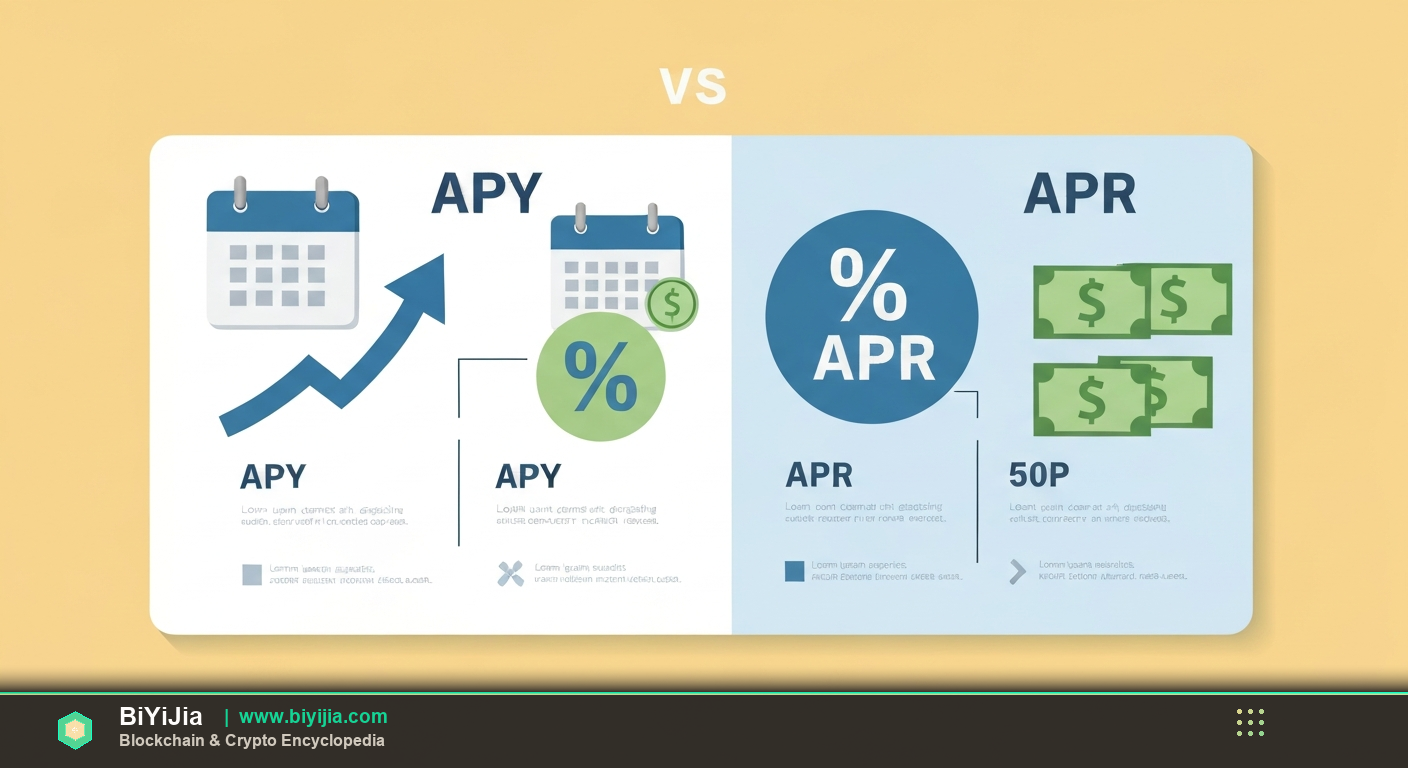
Technically, APY (Annual Percentage Yield) assumes that any earned interest is reinvested and compounds at a set frequency—daily, weekly, or monthly—so the final amount reflects that growth. APR (Annual Percentage Rate) is a flat rate that tells you what you’ll pay or earn on the original amount, ignoring any reinvested interest.
Think of APR like a straight‑line road: you travel the same distance each day. APY is more like a hill where each step builds on the last, letting you go farther without extra effort.
How It Works
- Identify the nominal interest rate offered by the platform or lender.
- Determine the compounding frequency (daily, weekly, monthly, or continuously).
- Apply the APY formula:
APY = (1 + r/n)ⁿ - 1, whereris the nominal rate andnis compounding periods per year. - For APR, simply use the nominal rate without adjusting for compounding.
- Compare the two figures to understand the effective return or cost.
Core Features
- Compounding Frequency: APY varies with how often interest is added back to the principal.
- Nominal Rate Transparency: APR shows the base rate without hidden growth.
- Regulatory Disclosure: Both figures are required by law in many jurisdictions for consumer clarity.
- Yield Predictability: APR is easier to predict for borrowers, while APY gives investors a realistic picture of earnings.
- Impact on Staking: In DeFi, staking contracts typically quote APY to reflect token rebasing.
- Effect of Fees: APR may include fees in its calculation, whereas APY focuses solely on interest earned.
Real-World Applications
- Aave: Offers variable‑rate lending with APR displayed for borrowers and APY for lenders; as of Q1‑2026, its stable‑rate APR averaged 7.2%.
- Coinbase Earn: Provides staking yields on ETH with an advertised APY of 4.5% after accounting for daily compounding.
- BlockFi (now integrated into Nexo): Previously listed a 9.5% APY on USDC deposits, reflecting weekly compounding.
- Traditional Bank Savings: Many U.S. banks list APY around 0.45% for high‑yield accounts, illustrating the low‑interest environment compared to crypto.
- Credit Card Industry: Visa‑linked cards typically quote APRs ranging from 15% to 24% for purchases.
Comparison with Related Concepts
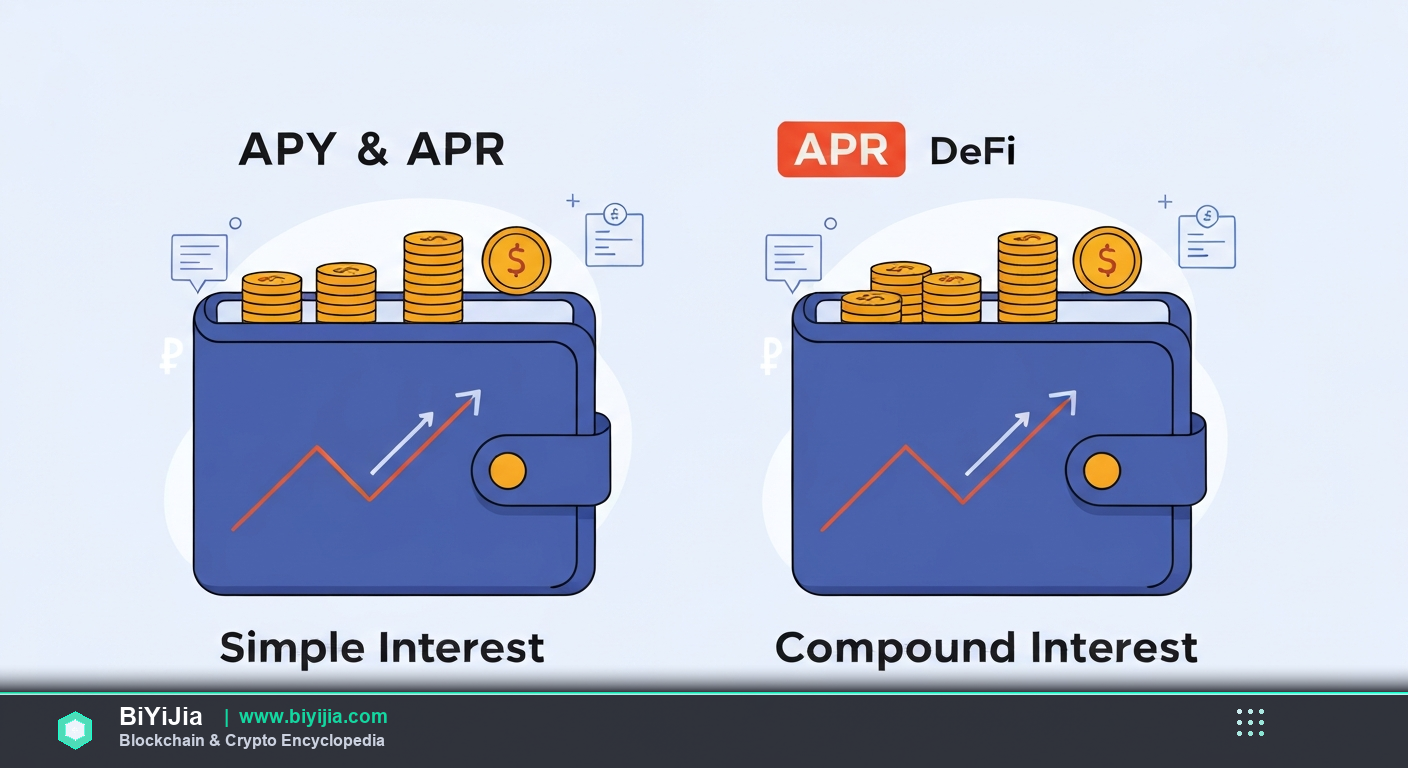
APY vs APR: APY shows the effect of compounding, making it higher than the nominal rate; APR shows the simple yearly cost or gain without compounding.
APY vs Simple Interest: Simple interest is essentially APR applied to the principal only, whereas APY incorporates the reinvestment of earned interest.
APY vs Compound Interest: Compound interest is the mechanism behind APY; the term APY is the annualized expression of that compound growth.
APY vs Staking Yields: Staking yields are usually quoted as APY because the protocol automatically adds rewards to the staked balance, compounding over time.
Risks & Considerations
- Lock‑up Periods: High APY offers often require you to lock tokens for weeks or months, limiting liquidity.
- Variable Rates: Many DeFi platforms adjust APY dynamically based on supply/demand, so the advertised rate can drop suddenly.
- Fee Inclusion: APR may embed hidden fees, making the effective cost higher than the headline number.
- Smart‑Contract Risk: Staking APY depends on code that could be exploited, potentially erasing expected yields.
- Inflation Impact: Even a high APY can be eroded by token inflation if the reward token’s supply expands rapidly.
Embedded Key Data
According to the 2025 DeFi Pulse report, the average APY on top‑tier staking platforms topped 12% for ETH and SOL, driven by network upgrades and higher transaction fees.
A 2024 Bankrate survey found that the average APR on U.S. credit cards settled at 19.5%, highlighting the stark contrast between traditional borrowing costs and crypto‑based yields.
Frequently Asked Questions
What is the difference between APY and APR?
APY includes the effect of interest that is reinvested and compounded over the year, giving a higher figure than the simple annual rate. APR is a flat rate that does not consider compounding, so it reflects the cost or return on the original principal only.
Why do DeFi platforms quote APY instead of APR?
DeFi protocols often automatically restake rewards, meaning your balance grows continuously. APY captures that ongoing compounding, providing a more accurate picture of what you’ll actually earn.
Can APR ever be higher than APY?
Only when the nominal rate is negative or when fees are added to APR but not to APY. In normal positive‑rate environments, APY will always be equal to or greater than APR.
How does compounding frequency affect APY?
The more often interest compounds, the larger the APY. Daily compounding yields a higher APY than monthly compounding for the same nominal rate because interest is added back to the principal more frequently.
Should I chase the highest APY?
Not blindly. High APY can hide lock‑up periods, volatility, or smart‑contract risk. Evaluate the underlying protocol, tokenomics, and your own risk tolerance before committing capital.
Summary
APY vs APR is a fundamental comparison that tells you whether interest is being compounded (APY) or calculated simply on the original amount (APR). Understanding the distinction helps you evaluate both crypto staking yields and traditional loan costs, guiding smarter financial decisions. For deeper insight, explore related concepts like Compound Interest, Simple Interest, DeFi, and Staking Yields.