Gwei is the most common way to express gas prices on Ethereum.
Key Takeaways
- Definition: Gwei is a denomination of Ether equal to 10⁹ wei.
- Core feature: It standardizes gas fee calculations across wallets and dApps.
- Real‑world use: All transaction fees on Ethereum are quoted in Gwei.
- Comparison: Unlike USD, Gwei is a blockchain‑native unit tied to network demand.
- Risk warning: Misreading Gwei values can lead to overpaying or stuck transactions.
What Is Gwei?
In plain English, Gwei is the unit you see when you check the gas price for an Ethereum transaction.
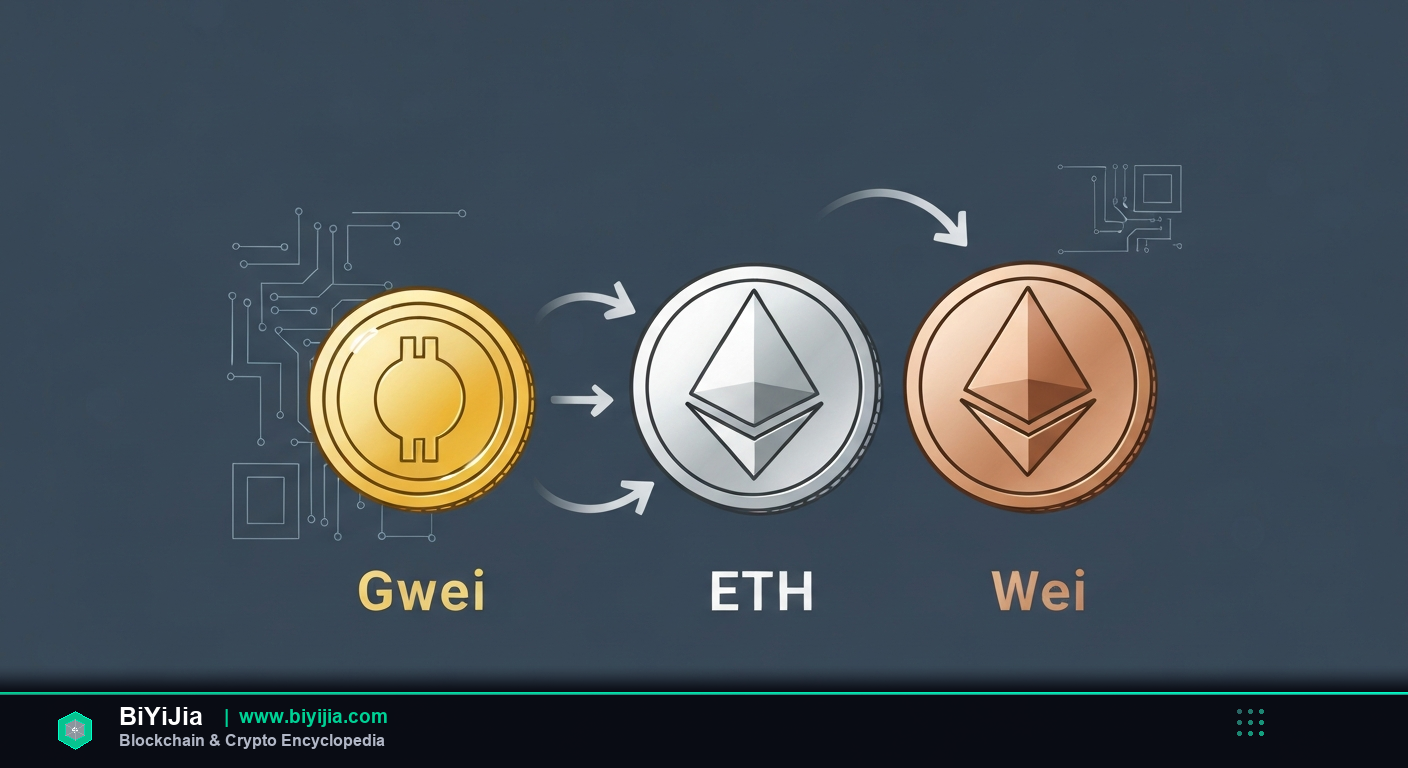
Technically, Ether (ETH) is broken down into wei, the smallest possible unit (1 ETH = 1,000,000,000,000,000,000 wei). Gwei sits three orders of magnitude above wei, meaning 1 Gwei = 1,000,000,000 wei, which makes it a convenient middle ground for humans to read and for machines to calculate.
Think of Gwei like the cents you use for everyday purchases: you wouldn’t count every single millimeter of a dollar bill, but you do count cents to know the exact price.
How It Works
- When you send a transaction, your wallet asks the network for a gas price, usually expressed in Gwei.
- The chosen Gwei value multiplies by the gas limit (the amount of computation you need) to produce the total fee in wei.
- The fee is then deducted from your ETH balance, while the miner or validator receives the reward in the same unit.
- As network congestion changes, wallets automatically adjust the Gwei price to keep your transaction timely.
- After the block is mined, the fee is recorded on‑chain in wei, but explorers display it in Gwei for readability.
Core Features
- Granular Precision: Allows fee specification down to one‑billionth of an ETH, avoiding rounding errors.
- Human‑Friendly: Easier to read than raw wei numbers, which can be 18‑digit strings.
- Network‑Responsive: Dynamic adjustment to congestion ensures transactions are processed promptly.
- Universal Standard: All major wallets, explorers, and DeFi protocols quote gas in Gwei.
- Compatibility: Works seamlessly with Ethereum Layer‑2 solutions that adopt the same denomination.
Real-World Applications
- MetaMask: Displays current gas prices in Gwei and lets users manually set a preferred rate.
- Uniswap v4: Calculates swap fees in Gwei, ensuring users see exactly how much ETH they’ll spend.
- Etherscan: Shows average gas price in Gwei for each block, helping analysts track network health.
- Arbitrum: Uses Gwei as the base unit for its rollup fee model, keeping consistency across layers.
- OpenSea: Charges listing fees and transaction costs in Gwei, simplifying cost estimation for creators.
Comparison with Related Concepts
Gwei vs Wei: Wei is the absolute smallest unit (1 ETH = 10¹⁸ wei) and is rarely used for human interaction, whereas Gwei offers a balance between precision and readability.
Gwei vs ETH: Quoting fees in ETH would require many decimal places, making UI cluttered; Gwei provides a clean, integer‑based display.
Gwei vs Gas Fee: Gas fee is the product of gas limit and gas price; Gwei is the unit of the gas price component.
Risks & Considerations
- Overpayment: Setting a Gwei price far above market rates wastes ETH, especially during low congestion periods.
- Underpayment: Too low a Gwei value can cause transactions to sit pending indefinitely, tying up funds.
- Volatility: Sudden spikes in network activity (e.g., popular NFT drops) can double or triple typical Gwei rates within minutes.
- Human Error: Mistaking Gwei for wei (or vice versa) leads to mis‑calculated fees; always double‑check the unit displayed.
- Layer‑2 Mismatch: Some Layer‑2 solutions quote fees in different units; forgetting to convert can cause unexpected costs.
Embedded Key Data
According to Etherscan, the average gas price in March 2026 settled at 22.7 Gwei, a 15 % increase from the same month in 2025 (source: Etherscan Monthly Gas Report).
Glassnode recorded that on‑chain transaction fees summed to 0.42 ETH per day, equivalent to roughly 9,800 USD at the 2026 ETH price of $23,600 (source: Glassnode On‑Chain Metrics).
Frequently Asked Questions
What is Gwei and why does it matter?
Gwei is a denomination of Ether equal to one‑billionth of an ETH. It matters because every gas price on Ethereum is quoted in Gwei, making fee calculations transparent and comparable across wallets and dApps.
How do I convert Gwei to ETH?
Divide the Gwei amount by 1,000,000,000. For example, 50 Gwei equals 0.000000050 ETH. Most wallets handle the conversion automatically, but knowing the formula helps when you manually set gas prices.
Is Gwei used on Layer‑2 solutions?
Yes. Most Layer‑2 rollups like Arbitrum, Optimism, and zkSync retain Gwei as the base unit for their fee structures to keep a seamless user experience with the Ethereum mainnet.
Can I set my own Gwei price?
Absolutely. Advanced wallets let you override the suggested gas price. Choosing a higher Gwei can speed up confirmation, while a lower Gwei saves ETH but risks longer pending times.
What happens if I send a transaction with too low a Gwei?
The transaction will remain in the pending pool until miners or validators deem the price acceptable. If the network stays busy, the transaction may eventually be dropped, returning the nonce to your account.
How does Gwei relate to Decentralized Finance (DeFi)?
Every DeFi interaction—swaps, liquidity provision, borrowing—incurs a gas fee quoted in Gwei. Understanding Gwei helps you budget ETH costs when using protocols like Uniswap, Aave, or Maker.
Summary
Gwei is the Ethereum denomination that bridges the gap between the massive precision of wei and the user‑friendly display of ETH, serving as the standard unit for gas pricing. Mastering Gwei lets you control transaction costs, avoid common pitfalls, and interact confidently with DeFi, NFTs, and Layer‑2 ecosystems.
For deeper insight, explore related concepts such as Gas Fee, ETH Unit, Wei, and Transaction Fee.