

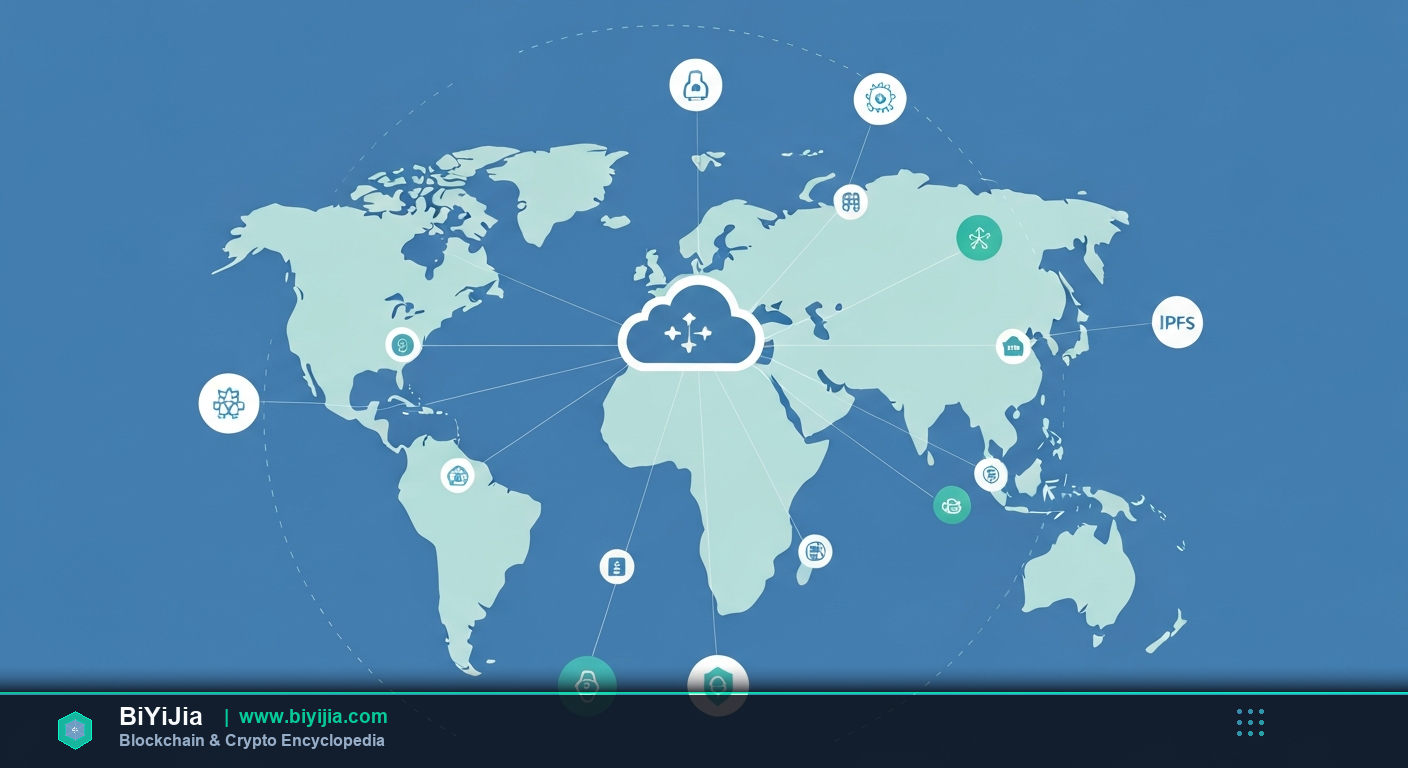
Decentralized Storage (DS) is a network‑based approach to data storage where files are split, encrypted, and distributed across many independent nodes rather than held on a single centralized server.
Key Takeaways
- Definition: A peer‑to‑peer system that stores data across a distributed network of nodes.
- Core features: Redundancy, cryptographic security, and ownership of data.
- Real‑world use: Projects like Filecoin, Arweave, and IPFS power decentralized apps and archival services.
- Traditional vs. decentralized: Unlike cloud providers, there is no single point of failure or corporate control.
- Risk warning: Network uptime, token volatility, and legal jurisdiction can affect availability.
What Is Decentralized Storage?
In plain language, decentralized storage is a way to keep your files on a global mesh of computers instead of a single data center.
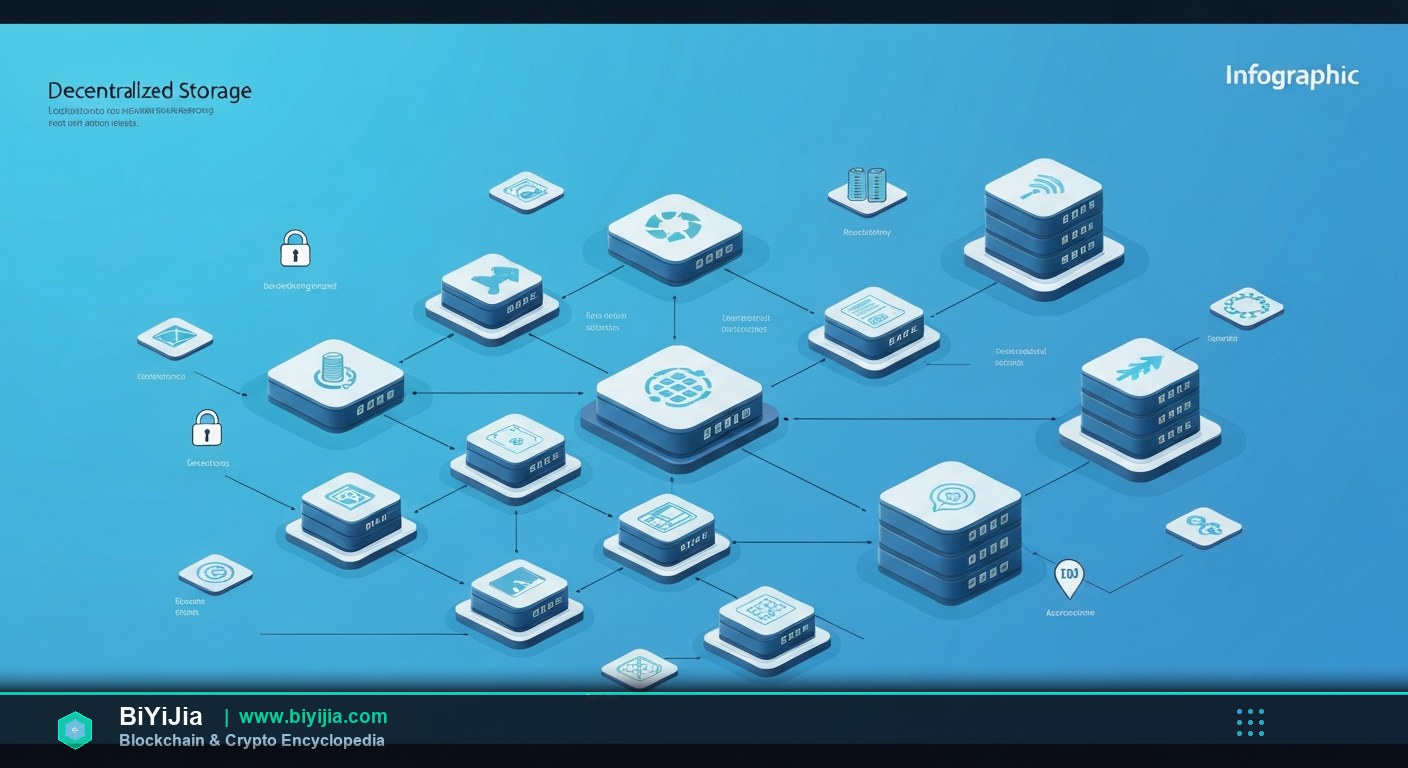
Technically, the system chops files into small pieces, encrypts each piece, and spreads them across a network of storage providers that earn tokens for holding data. Retrieval works by re‑assembling the pieces using a content identifier, which guarantees integrity without any central authority.
Think of it like a library where every patron copies a chapter of a book and hides it in their own locker; you can still read the whole book because you collect the chapters from many lockers instead of borrowing from a single shelf.
How It Works
- Upload & chunking: You submit a file to the network; the protocol slices it into cryptographic shards.
- Encryption & addressing: Each shard is encrypted and given a unique hash that serves as its address.
- Distribution: The shards are sent to storage miners or node operators who commit space in exchange for token rewards.
- Redundancy: The network automatically creates multiple copies of each shard to protect against node failure.
- Retrieval: When you request the file, the protocol locates the shards, verifies the hashes, and reassembles the original data.
Core Features
Decentralization: No single entity controls the entire dataset, reducing censorship risk.
Cryptographic security: Data is encrypted before it ever leaves your device.
Redundancy & durability: Multiple copies across diverse geographic locations ensure high availability.
Incentive‑aligned economics: Token rewards motivate storage providers to keep data online and honest.
Content‑addressable retrieval: Files are fetched by their hash, guaranteeing integrity without needing a directory.
Programmable storage contracts: Smart contracts define duration, price, and proof‑of‑storage requirements.
Real-World Applications
- Filecoin: A decentralized marketplace where miners earn FIL tokens for providing Filecoin storage; as of Q1 2026, the network stores over 30 EB of data.
- IPFS (InterPlanetary File System): A peer‑to‑peer hypermedia protocol used by countless dApps; more than 1.2 billion objects are pinned across the network.
- Arweave: Offers permanent, pay‑once storage; it hosts over 12 PB of immutable web content.
- Storj: Uses encrypted shards stored on cloud providers and personal devices; it reports a 99.9% SLA across its global fleet.
- Livepeer (video streaming): Leverages decentralized storage to cache video segments, reducing bandwidth costs for creators.
Comparison with Related Concepts
IPFS vs. Filecoin storage: IPFS is a protocol for content‑addressed file sharing, but it doesn’t guarantee persistence; Filecoin adds economic incentives and proofs to ensure files are stored for a defined period.
Decentralized storage vs. traditional cloud: Cloud services rely on centralized data centers owned by a single company, while decentralized storage distributes data across independent operators, eliminating a single point of control.
Arweave vs. Filecoin: Arweave focuses on permanent storage with a one‑off fee, whereas Filecoin offers flexible contracts that can be renewed or terminated.
Risks & Considerations
Network uptime: If a large share of storage nodes go offline, data retrieval times can increase dramatically.
Token volatility: The cost of Filecoin storage or other token‑based services can swing wildly as market prices shift.
Legal jurisdiction: Data may be stored in countries with restrictive laws, exposing users to potential seizure or censorship.
Proof‑of‑storage attacks: Malicious actors could try to fake storage proofs, though most networks now use robust cryptographic schemes.
User error: Losing the original content identifier or encryption keys makes data effectively unrecoverable.
Embedded Key Data
According to the Filecoin Network Statistics Dashboard, total storage power grew from 20 EB in 2024 to over 30 EB by March 2026, reflecting a 50% increase in active miners (source: Filecoin Foundation).
IPFS usage metrics show that daily active pinning nodes exceeded 150,000 in Q2 2026, a three‑fold rise compared to 2022 (source: IPFS Project Reports).
Frequently Asked Questions
What is decentralized storage and how does it differ from cloud storage?
Decentralized storage stores data on a distributed network of independent nodes, eliminating a single provider that can control or censor the content. Cloud storage, by contrast, keeps files on servers owned by a single company, creating a central point of failure and control.
How does IPFS ensure my file stays available?
IPFS uses content‑addressed hashes to locate files, but persistence depends on nodes voluntarily pin the data. To guarantee long‑term availability, many users pair IPFS with incentive layers like Filecoin storage.
Can I retrieve my data if the token price drops?
Yes, once you have paid for storage, the data remains available as long as the storage contract is active. However, if you need to renew a contract and the token price has fallen dramatically, the cost in fiat terms could be higher.
Is my data private on decentralized networks?
Data is encrypted before leaving your device, so storage providers only see ciphertext. The privacy model relies on strong encryption keys; losing those keys means you lose access.
What are “Proofs of Replication” and why do they matter?
Proofs of Replication (PoRep) are cryptographic proofs that a storage miner actually stores a unique copy of your data. They protect against cheating and are a core security guarantee for networks like Filecoin.
Do I need technical expertise to use decentralized storage?
Many user‑friendly wallets and gateways now abstract the complexity. You can upload files via a web UI or CLI without writing code, though understanding concepts like CIDs helps when troubleshooting.
Summary
Decentralized Storage reshapes how we think about data ownership by spreading files across a global mesh of incentivized nodes, offering resilience and censorship resistance. As the ecosystem matures, concepts like IPFS, Filecoin storage, and Arweave become essential tools for developers and everyday users alike.