
Key Takeaways
- Definition: Diamond hands mean refusing to sell during downturns; paper hands describe quick exits at the first dip.
- Core feature: Both terms capture emotional discipline (or lack thereof) rather than technical strategy.
- Real‑world application: Traders label themselves on social media when they HODL or panic sell Bitcoin, Ethereum, or meme tokens.
- Comparison: Diamond hands are the opposite of paper hands, similar to HODL versus panic selling.
- Risk warning: Blindly holding can lock in losses; exiting too fast can miss rebounds.
What Is Diamond Hands & Paper Hands?
Diamond hands meaning is a colloquial way of saying an investor will hold a position despite market volatility, while paper hands meaning describes the opposite behavior of selling at the first sign of trouble.
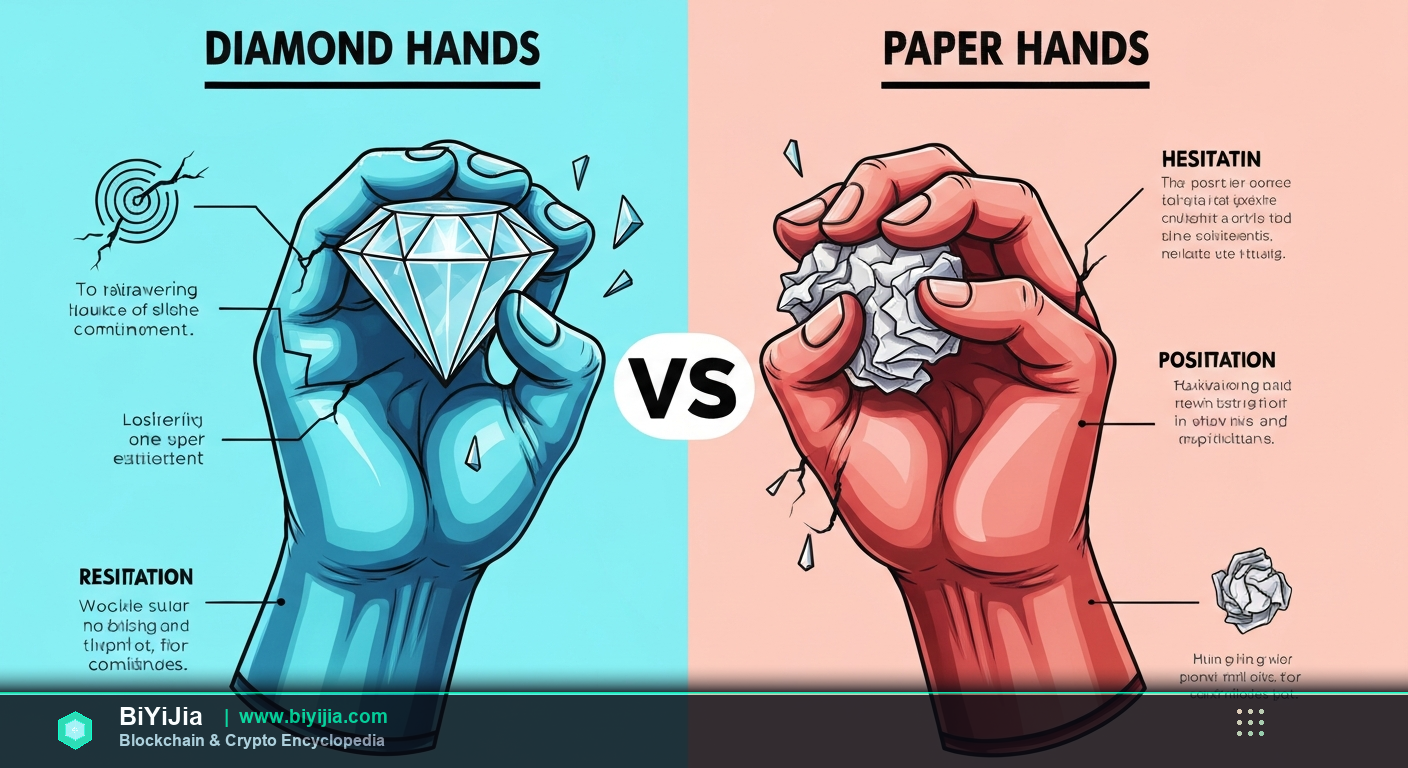
In crypto slang, the terms are shorthand for psychological resilience versus susceptibility. Diamond hands embody the belief that long‑term value will emerge, often backed by the idea of HODL. Paper hands, on the other hand, reflect a fear of loss that triggers panic selling, especially in highly volatile assets.
Think of a roller‑coaster: a rider with diamond hands keeps their hands on the bar through every twist, trusting the ride will end safely. A rider with paper hands slams the brakes at the first hill, missing the thrill and the eventual payoff.
How It Works
- Identify an asset you believe has long‑term upside, such as Bitcoin, a DeFi token, or an NFT project.
- Set a mental or algorithmic rule that defines when you will sell – for diamond hands, the rule is usually "never sell unless fundamentals change".
- Monitor market volatility. Paper hands trigger a sell when price drops a certain percentage (e.g., 10%).
- Maintain discipline. Diamond‑handers often use cold‑storage wallets to avoid impulsive trades.
- Re‑evaluate periodically. Even diamond hands may adjust if the underlying project fails to deliver.
Core Features
- Emotional Discipline: Diamond hands require staying calm during drawdowns; paper hands react emotionally to price swings.
- Time Horizon: Diamond hands operate on a long‑term view, often years; paper hands focus on short‑term price movements.
- Risk Appetite: Diamond‑handers accept higher short‑term risk for potential upside; paper‑handers prefer low‑risk, quick‑exit strategies.
- Community Signaling: Social platforms like X and Discord use emojis and memes to broadcast whether a trader has diamond or paper hands.
- Interaction with Decentralized Finance (DeFi): In DeFi, diamond hands can boost protocol security by reducing sudden liquidity drains, while paper hands can trigger flash‑loan exploits.
- Market Impact: Large clusters of paper hands can cause panic selling spikes, amplifying market volatility.
Real-World Applications
- Bitcoin (BTC): In 2024, holders who kept their BTC through a 30% dip saw a 45% rebound within six months; data from CoinMetrics shows a 68% holding rate over 30‑day periods.
- Uniswap (UNI): During the 2025 DeFi summer, users who staked UNI without withdrawing earned an average APY of 12.4% despite a 22% price correction.
- Axie Infinity (AXS): Players who retained AXS during the 2024 market crash earned a 3‑year token‑burn reward that boosted price by 18% later that year.
- Ethereum (ETH) 2.0 Staking: Validators who kept their ETH staked through volatility earned consistent staking rewards, averaging 5.3% per annum in 2025.
- Dogecoin (DOGE) Meme Community: A wave of paper‑hand exits in early 2025 drove DOGE’s price down 35% in a week, illustrating how sentiment can move a token.
Comparison with Related Concepts
Diamond Hands vs Paper Hands: Diamond hands prioritize holding through downturns, often citing HODL or long‑term fundamentals. Paper hands prioritize quick exits, driven by fear of loss and market volatility.
Diamond Hands vs HODL: While both involve holding, diamond hands specifically emphasize resilience during extreme dips, whereas HODL is a broader meme that can include casual, non‑strategic holding.
Paper Hands vs Panic Selling: Paper hands describe the mindset; panic selling is the actual execution of that mindset, often triggering sharp price drops.
Diamond Hands vs Holding Firm: Holding firm is a neutral term that can describe any steady position, while diamond hands carry a brag‑worthy connotation within crypto culture.
Risks & Considerations
- Opportunity Cost: Holding a losing asset ties up capital that could be deployed elsewhere.
- Liquidity Risk: In thin markets, diamond‑hand positions can become illiquid, making exit costly when needed.
- Psychological Burnout: Constant exposure to drawdowns can erode confidence and lead to emotional fatigue.
- Regulatory Changes: Sudden policy shifts can render a previously solid asset worthless, regardless of hand type.
- Market Manipulation: Coordinated paper‑hand attacks can create artificial price crashes, harming long‑term holders.
Embedded Key Data
According to Glassnode, 68% of Bitcoin holders retained positions for over 30 days in 2025, marking the highest long‑term holding rate since 2017.
The Crypto Fear & Greed Index reported that daily market volatility peaked at an average of 3.2% in Q2 2025, a level that amplified paper‑hand behavior across meme tokens.
Frequently Asked Questions
What does "diamond hands" actually mean?
It’s a slang term for investors who refuse to sell an asset during price drops, trusting that the underlying value will recover over time.
How can I develop diamond hands?
Start by defining clear, long‑term fundamentals for any asset you buy, use cold storage to limit impulsive trades, and regularly review the project’s roadmap instead of daily price charts.
Are paper hands always a bad thing?
Not necessarily. If an asset’s fundamentals deteriorate, exiting early can preserve capital. The key is to distinguish fear‑driven exits from rational re‑allocation.
Do diamond hands affect market prices?
Collective diamond‑hand behavior can reduce sell pressure, helping stabilize prices during downturns. Conversely, mass paper‑hand exits often create rapid price declines.
Is there a metric to measure how many traders have diamond hands?
On‑chain analytics platforms like Glassnode track holding periods and wallet age, which serve as proxies for diamond‑hand sentiment.
Can I use diamond hands in DeFi staking?
Yes. Staking tokens for long periods aligns with the diamond‑hand ethos, as it locks assets in a protocol, earning rewards while preventing impulsive sales.
Summary
Diamond Hands & Paper Hands capture the psychological extremes of holding versus exiting in volatile crypto markets. Understanding these mindsets helps traders balance risk, avoid emotional traps, and make more disciplined decisions. For deeper insight, explore related concepts such as HODL, panic selling, and market volatility.