
GameFi refers to the fusion of gaming and decentralized finance, letting players earn crypto rewards through play-to-earn mechanics on blockchain platforms.
Key Takeaways
- GameFi blends video games with financial incentives, letting users earn crypto while playing.
- Core features include tokenized assets, NFT ownership, and on‑chain economies.
- Projects like Axie Infinity and Decentraland have generated billions in user‑generated value.
- Unlike traditional games, rewards are owned by players and can be traded on open markets.
- Risks include token volatility, regulatory uncertainty, and game balance challenges.
What Is GameFi?
GameFi is a sector where games incorporate blockchain technology to let players earn real crypto assets.
Under the hood, a GameFi title runs on a public ledger, issues its own utility or governance token, and often mints NFTs that represent characters, items, or land. Smart contracts enforce the rules, automatically distributing rewards when players complete quests, win battles, or stake assets.
Think of it like a modern arcade where each ticket you win is a token you can cash out at a vending machine that never closes, and the tickets are stored in a digital wallet you control.
How It Works
- Developers create a blockchain‑based game and issue a native token plus optional NFTs for in‑game assets.
- Players connect a crypto wallet, mint or purchase NFTs, and start playing.
- Smart contracts track in‑game actions and automatically allocate token rewards or NFT drops.
- Earned tokens can be staked, swapped on decentralized exchanges, or used to influence game governance.
- Marketplace listings let players sell or trade NFTs, creating a player‑driven economy.
Core Features
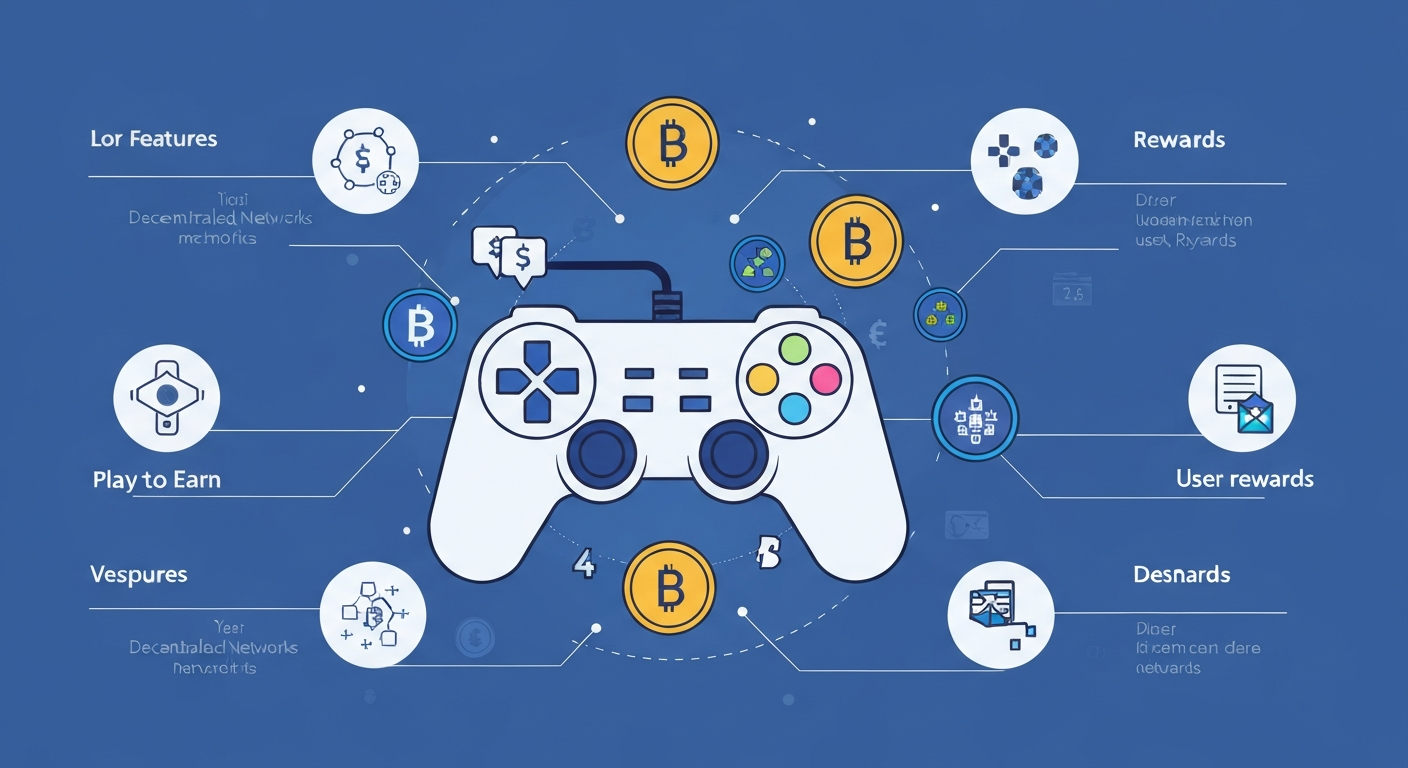
Play‑to‑Earn (P2E): Players receive token incentives for time and skill, turning gameplay into a source of income.
Token Incentives: Native tokens fuel the economy, rewarding actions, staking, and governance participation.
Non‑Fungible Tokens (NFTs): Unique digital collectibles that represent avatars, weapons, or virtual land, giving true ownership.
On‑Chain Governance: Token holders can vote on game updates, balancing, and treasury use, blurring the line between player and investor.
Interoperability: Some projects allow assets to move across multiple games or metaverses, expanding utility beyond a single title.
Decentralized Finance (DeFi) integration: Many GameFi platforms embed lending, staking, and yield‑farm mechanisms directly into the gameplay loop.
Real‑World Applications
Axie Infinity – A creature‑collecting battle game that paid out over $2.5 billion in token rewards in 2023, with daily active users peaking at 2.3 million.
Decentraland – A virtual world where land parcels are NFTs; as of Q1 2026, land sales have exceeded $400 million according to DappRadar.
The Sandbox – A voxel‑based sandbox where creators mint game assets; its token SAND saw a 120 % increase in trading volume in 2025.
Illuvium – An open‑world RPG that blends high‑fidelity graphics with DeFi staking pools; its pre‑sale raised $150 million.
Star Atlas – A space‑exploration MMO with a dual‑token model; by late 2025, its player‑driven economy generated $300 million in secondary market sales.
Comparison with Related Concepts
GameFi vs Traditional Gaming: Traditional games sell cosmetics or loot boxes with no resale value, while GameFi lets players own, trade, and monetize assets.
GameFi vs DeFi: DeFi focuses on financial services like lending and swapping, whereas GameFi adds a gamified layer that incentivizes participation through fun and competition.
GameFi vs NFT Collectibles: NFT collectibles are static assets, but GameFi integrates them into dynamic gameplay where utility and earnings evolve.
Risks & Considerations
Token Volatility: Rewards are paid in crypto that can swing wildly, turning a profitable grind into a loss.
Regulatory Uncertainty: Some jurisdictions treat in‑game tokens as securities, potentially restricting access.
Game Balance Exploits: Over‑generous reward structures can lead to inflation, making tokens less valuable.
Security Vulnerabilities: Smart contract bugs can be exploited, risking user funds.
Entry Barriers: High gas fees on congested chains may deter casual players.
Embedded Key Data
According to Dune Analytics, the total value locked (TVL) across GameFi protocols surpassed $12 billion in 2025, indicating rapid capital inflow.
Chainalysis reported that play‑to‑earn earnings accounted for 8 % of global crypto transaction volume in Q4 2025, highlighting the sector’s economic impact.
Frequently Asked Questions
What is the difference between GameFi and play‑to‑earn?
Play‑to‑earn (P2E) describes the specific mechanic of earning tokens through gameplay, while GameFi is the broader ecosystem that includes P2E, NFTs, on‑chain economies, and DeFi features.
Do I need to buy crypto before playing a GameFi title?
Not always. Some games let you start for free and earn tokens that you can later swap, but many require an initial purchase of NFTs or a small amount of the native token to cover transaction fees.
Can I lose money playing GameFi games?
Yes. If the token price drops, the value of earned rewards can diminish. Additionally, gas fees or failed transactions can erode profits.
Are GameFi projects safe from scams?
While many reputable teams exist, the space is still young. Always audit smart contracts, check community reputation, and avoid projects promising guaranteed returns.
How does staking work in GameFi?
Players can lock up native tokens or NFTs in a smart contract to earn yield, participate in governance, or boost in‑game performance. Staking rewards are typically paid in the same token.
Will traditional game studios adopt GameFi?
Increasingly so. Major publishers have launched blockchain‑enabled titles or partnered with existing GameFi platforms, signaling a convergence of mainstream gaming and crypto economies.
Summary
GameFi merges gaming with decentralized finance, letting players earn and own real digital assets. As the sector matures, it reshapes how we think about value creation in virtual worlds, intersecting with concepts like NFT, token incentives, and blockchain games.