

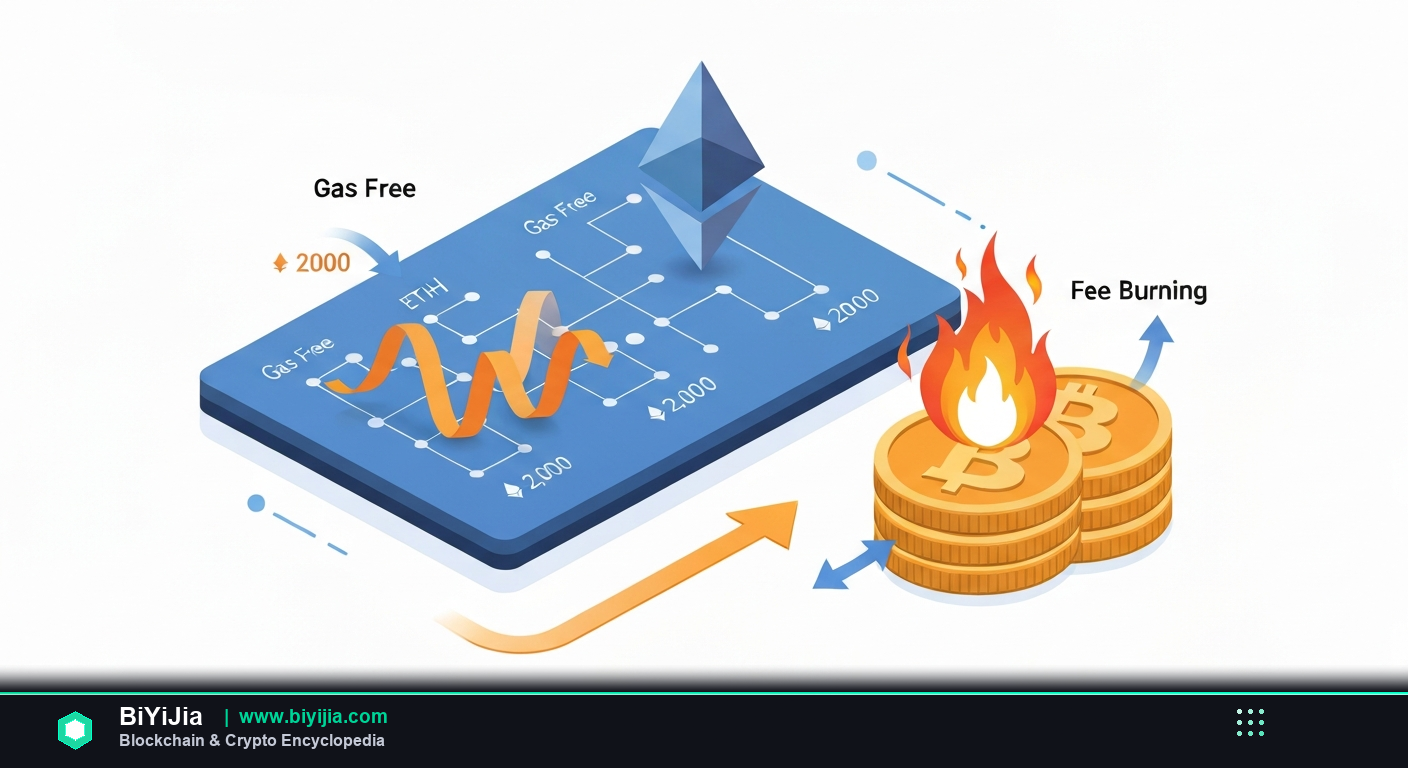
EIP-1559 refers to the 2021 Ethereum upgrade that introduced a base fee, priority fee, and a systematic ETH burn to improve fee predictability and reduce supply.
Key Takeaways
- One‑line definition: EIP-1559 is a fee market change that replaces the legacy auction with a base fee that is burned.
- Core features: Base fee, priority fee, automatic ETH burn, dynamic fee adjustment.
- Real‑world application: Used by most DeFi protocols, NFT marketplaces, and Layer‑2 rollups to lower gas volatility.
- Comparison to traditional alternative: Unlike the first‑price auction, EIP-1559 removes over‑paying and fee guessing.
- Risk warning: Burn-driven deflation can affect ETH price dynamics and miner revenue.
What Is EIP-1559?
In plain language, EIP-1559 is the Ethereum protocol change that makes transaction fees more predictable by introducing a burnable base fee.
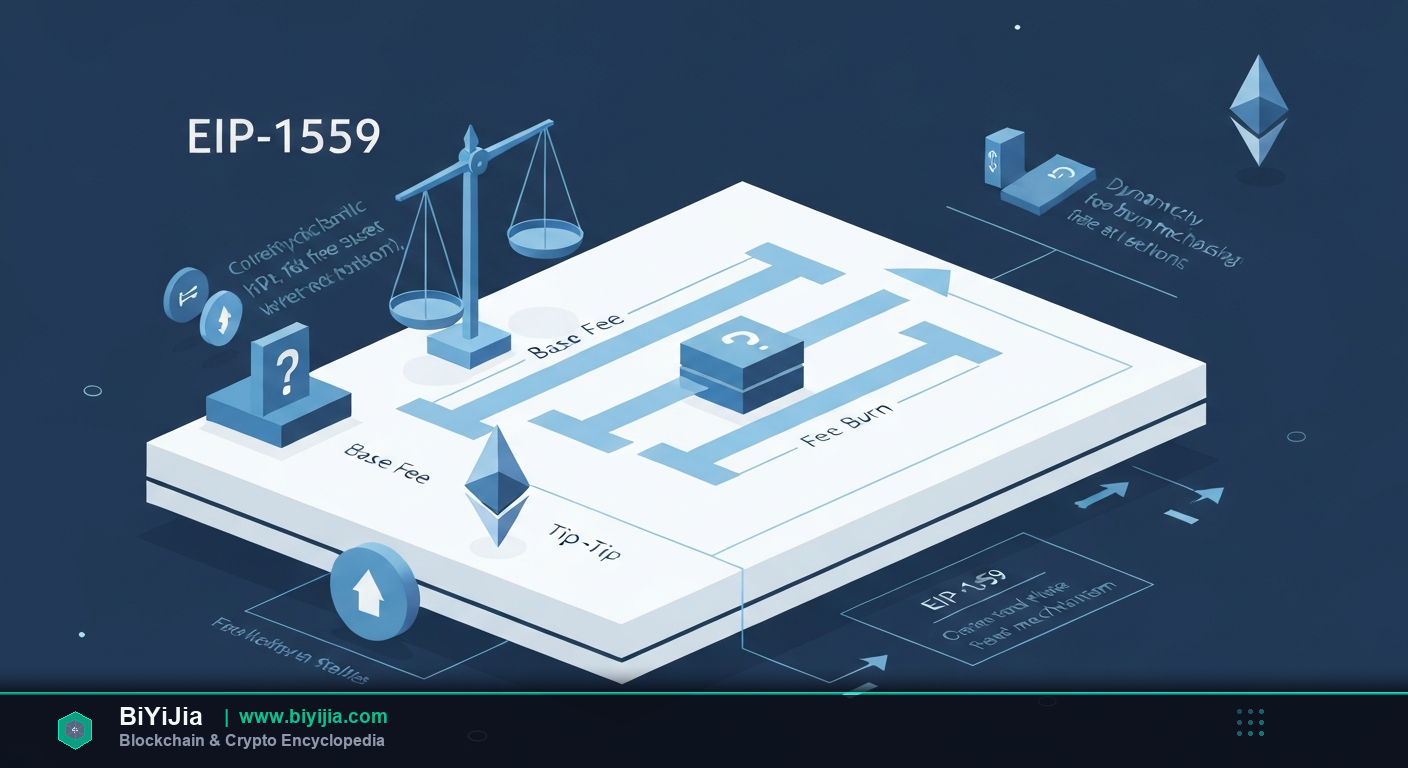
Technically, the upgrade splits the fee into a Base Fee that is algorithmically set and burned, and a Priority Fee (or tip) that goes to the block proposer. The Base Fee rises or falls depending on how full recent blocks were, aiming for a target block utilization of about 50 %.
Think of it like a subway system that charges a fixed fare for the ride (the Base Fee) which disappears into the city’s budget, while passengers can tip the driver extra for faster boarding (the Priority Fee).
How It Works
- When you submit a transaction, you specify a maximum fee you’re willing to pay and a tip for the miner.
- The network calculates the Base Fee for the next block based on the previous block’s gas usage.
- The Base Fee is automatically deducted from your max fee and sent to the protocol’s burn address.
- If you offered a tip, the remaining amount (max fee – Base Fee) goes to the block proposer as a Priority Fee.
- Any unused portion of your max fee is refunded to you, so you never overpay.
Core Features
Base Fee: A mandatory, algorithmically adjusted charge that is burned, removing ETH from circulation.
Priority Fee: An optional tip that incentivizes miners or validators to include your transaction quickly.
Dynamic Adjustment: The Base Fee rises when blocks are over‑filled and falls when they’re under‑utilized, targeting steady network throughput.
Fee Refunds: Any excess from the max fee you set is returned, eliminating the guess‑work of legacy auctions.
ETH Burn: The burned portion reduces total supply, contributing to Ethereum’s deflationary pressure.
Gas Optimization: By stabilizing fees, developers can better estimate transaction costs for smart contracts and dApps.
Real-World Applications
- Uniswap V3 – The leading DEX uses EIP-1559 to provide users with clearer fee estimates; over $1.2 B in volume passed through the protocol in Q1 2026.
- OpenSea – NFT marketplace leverages the Base Fee to smooth out gas spikes during high‑demand drops, processing 3.4 M sales in 2025.
- Arbitrum – Layer‑2 rollup benefits from predictable fees when batching transactions, achieving a 45 % reduction in gas cost per tx.
- Chainlink – Oracle network pays validators using the Priority Fee, ensuring timely data feeds without over‑paying.
- Optimism – Uses the burn mechanism to align incentives with Ethereum’s security model, burning roughly 0.8 M ETH in 2025.
Comparison with Related Concepts
EIP-1559 vs First‑Price Auction: The legacy model required users to outbid each other, often leading to over‑payment; EIP-1559 replaces that with a deterministic Base Fee and optional tip.
Base Fee vs Priority Fee: Base Fee is burned and cannot be reclaimed, while Priority Fee is a direct reward to the block proposer and remains in circulation.
ETH Burn vs Traditional Transaction Fees: Traditional fees simply move ETH from sender to miner; the burn permanently removes ETH, influencing supply dynamics.
Risks & Considerations
Miner/Validator Revenue Shift: The burn reduces direct mining rewards, potentially affecting validator participation if tip levels drop.
Deflationary Pressure: Continuous burning can lead to price volatility, especially during market downturns.
Fee Spikes During Congestion: Although the Base Fee adjusts, extreme demand can still cause high fees, making some DeFi actions costly.
Complexity for New Users: Understanding max fee, Base Fee, and tip can be confusing for newcomers.
Potential Protocol Changes: Future upgrades might modify the burn rate or fee algorithm, introducing uncertainty.
Embedded Key Data
In Q4 2025 the Ethereum network burned 5.2 million ETH, equivalent to roughly $9.3 B, according to Glassnode. By the end of 2025, total ETH burned since EIP-1559 activation surpassed 30 million ETH, representing about 12 % of the circulating supply.
Frequently Asked Questions
What is EIP-1559 and why does it matter?
EIP-1559 is a protocol upgrade that changes how transaction fees are calculated on Ethereum. It matters because it makes fees more predictable, reduces over‑payment, and introduces an ETH burn that can affect supply and price dynamics.
How does the Ethereum burn mechanism work under EIP-1559?
Each transaction includes a Base Fee that is automatically deducted and sent to a burn address, effectively removing that amount of ETH from total supply. The amount burned varies with network demand, creating a built‑in deflationary force.
Can I set my own fee after EIP-1559?
Yes. You still specify a maximum fee you’re willing to pay and a tip (Priority Fee). The protocol handles the Base Fee, but you control the tip to prioritize your transaction.
Does EIP-1559 affect DeFi protocols?
Absolutely. DeFi platforms like Uniswap and Aave rely on predictable gas costs for smart contract interactions. The reduced fee volatility improves user experience and can lower overall transaction costs.
Will the ETH burn continue forever?
Current specifications keep the burn active as long as the Base Fee exists. However, future Ethereum Improvement Proposals could adjust or pause the mechanism, so it’s not set in stone.
How does EIP-1559 compare to fee models on other blockchains?
Blockchains like Solana use a flat fee model, while Bitcoin still relies on a first‑price auction. EIP-1559’s hybrid approach—burning a variable base fee and allowing tips—offers a middle ground between predictability and market‑driven incentives.
Summary
EIP-1559 introduced a Base Fee that is burned, a Priority Fee for proposers, and a dynamic adjustment algorithm, fundamentally reshaping Ethereum’s fee market. Its impact ripples through DeFi, NFTs, and Layer‑2 solutions, making fee estimation easier while adding a deflationary burn component. Understanding EIP-1559 is essential for anyone navigating the Ethereum ecosystem, especially when considering related concepts like Base Fee, Priority Fee, ETH Burn, and Gas Optimization.