Public Key & Private Key is a pair of cryptographic strings that work together to secure data and verify ownership.
Key Takeaways
- One public key can be shared freely; its private counterpart must stay secret.
- They enable asymmetric encryption, allowing anyone to encrypt while only the holder can decrypt.
- Used daily in wallets, smart contracts, and secure messaging.
- Unlike symmetric keys, they eliminate the need to exchange secret material over insecure channels.
- Loss or exposure of the private key means total loss of assets.
What Is Public Key & Private Key?
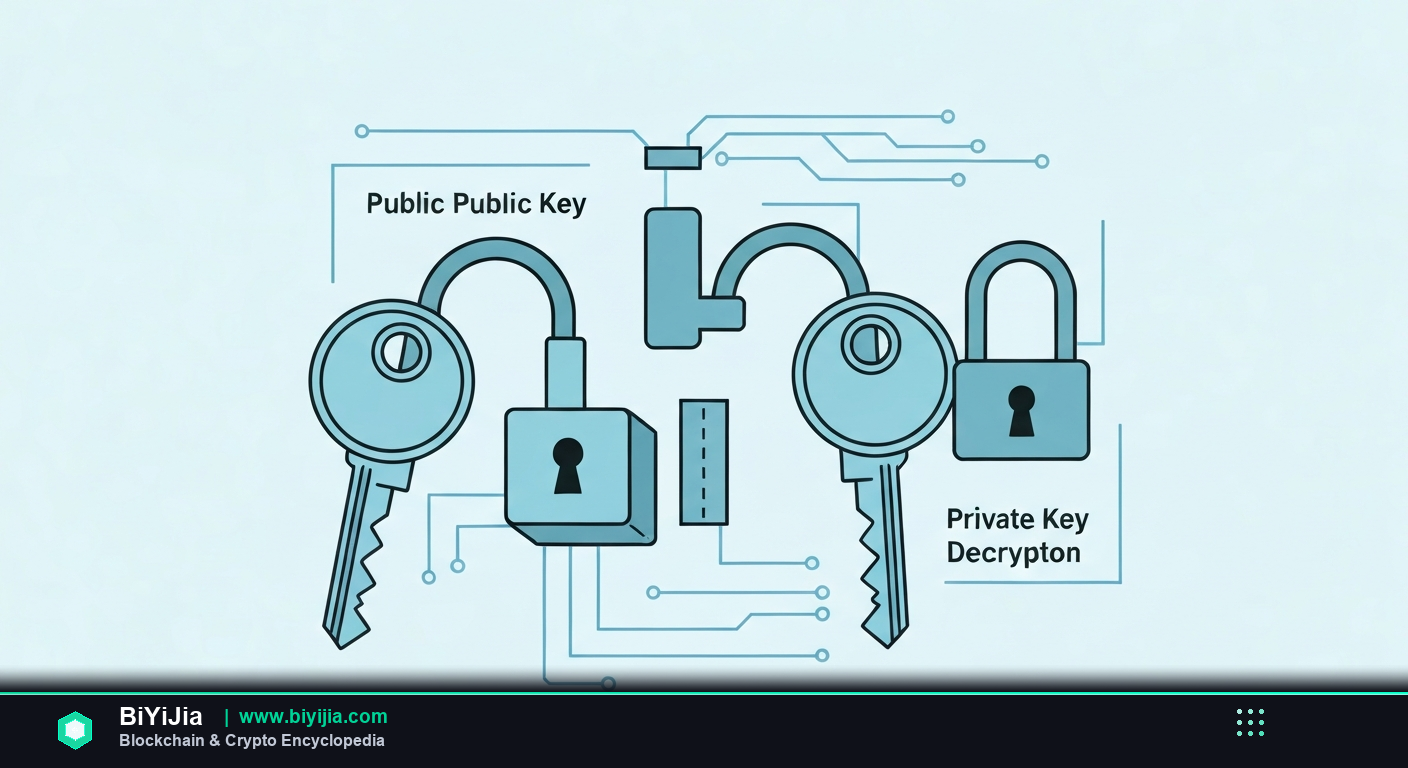
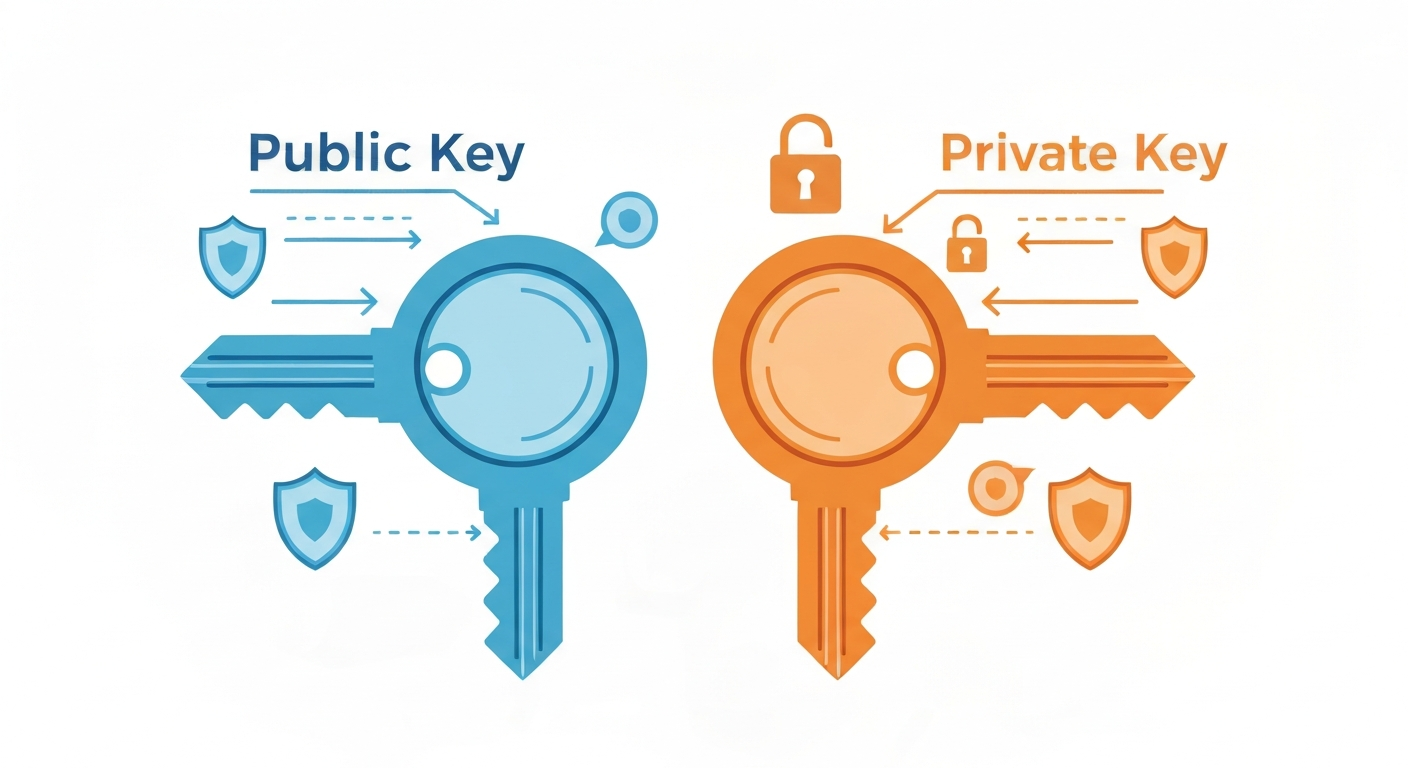
In plain language, a public key is an address you can give to anyone, while a private key is the secret password that lets you control that address.
Technically, the two keys are mathematically linked through elliptic curve algorithms (most commonly secp256k1). The public key is derived from the private key via a one‑way function, meaning you can compute the public key from the private key, but not the reverse.
Think of it like a mailbox: the public key is the mailbox number you publish, anyone can drop a letter (encrypted data) inside, but only you have the key (private key) to open the mailbox and read the contents.
How It Works
- Generate a random 256‑bit number – this becomes your private key.
- Apply the elliptic curve multiplication to derive the corresponding public key.
- Share the public key (or its hash, the address) with anyone who wants to send you data.
- When data is encrypted with your public key, only the matching private key can decrypt it.
- For signatures, you sign a transaction with the private key; the network verifies it using the public key.
Core Features
- Asymmetry: One key encrypts, the other decrypts.
- Deterministic Derivation: Public key is uniquely generated from the private key.
- Irreversibility: Private key cannot be derived from the public key.
- Compact Representation: Public keys are typically 33 or 65 bytes; private keys are 32 bytes.
- Compatibility: Supported across Bitcoin, Ethereum, Solana, and most Layer‑2 solutions.
- Non‑Repudiation: Digital signatures prove ownership without revealing the private key.
Real-World Applications
- Bitcoin – Every address is a hash of a public key; spending requires the private key's signature.
- Ethereum – Smart contracts rely on public keys to verify transaction authenticity; ~200 million accounts as of 2026 (Etherscan).
- MetaMask Wallet – Stores the private key locally; uses the public key to interact with dApps.
- Signal Messenger – Uses the X3DH protocol, which builds on public‑private key pairs for end‑to‑end encryption.
- Hardware Security Modules (HSMs) – Securely generate and store keys for enterprise blockchains.
Comparison with Related Concepts
Public Key vs Private Key: The public key is openly broadcast and can be used by anyone to encrypt or verify a signature. The private key stays hidden and is the only tool that can decrypt data or create a valid signature.
Public Key vs Seed Phrase: A seed phrase is a human‑readable list (usually 12‑24 words) that deterministically generates a hierarchy of private keys. The public key is derived from a single private key, not from the phrase directly.
Public Key vs Digital Signature: The public key validates a digital signature, while the signature itself is produced using the private key. They work hand‑in‑hand, but serve different roles.
Risks & Considerations
- Private Key Loss: If you lose the private key and have no backup, the assets are unrecoverable.
- Exposure: Storing a private key on an insecure device can lead to theft.
- Weak Generation: Poor randomness can produce predictable keys, making brute‑force attacks feasible.
- Quantum Threat: Future quantum computers could theoretically reverse‑engineer elliptic curve keys; research into post‑quantum algorithms is ongoing.
- Phishing: Users may be tricked into entering their private key on malicious sites.
Embedded Key Data
According to a 2024 Chainalysis report, over 60% of cryptocurrency thefts involved compromised private keys or insecure storage practices.
The Ethereum network processed more than 1.2 billion transactions in 2025, each requiring a valid public‑private key pair for signature verification (Etherscan, 2026).
Frequently Asked Questions
Can I use the same private key for multiple wallets?
Technically you can, but it’s a terrible idea. Reusing a private key across unrelated services increases attack surface and makes key management a nightmare. I’ve seen users lose funds because a single compromised key gave hackers access to several wallets.
How do hardware wallets protect my private key?
Hardware wallets generate and store the private key inside a tamper‑proof chip. The key never leaves the device; only signed transaction data is exported. In my experience, this isolation dramatically reduces phishing risk.
Is a public key the same as a wallet address?
Not exactly. A wallet address is usually a hash of the public key (e.g., Bitcoin’s Base58Check or Ethereum’s Keccak‑256 hash). The address is shorter and more user‑friendly, but it still derives from the public key.
What happens if I share my private key accidentally?
Anyone with the private key can move every asset tied to its corresponding address. The moment it’s exposed, treat the funds as compromised and transfer them to a new, secure address.
Do I need to back up my seed phrase if I have the private key?
The seed phrase is a master key that can recreate all derived private keys. If you only back up a single private key, you lose the ability to recover other accounts generated from the same seed. Best practice: back up the seed phrase, not individual private keys.
Will quantum computers break public‑private key cryptography?
Quantum algorithms like Shor’s could theoretically break elliptic curve cryptography, but practical quantum computers capable of that scale are still years away. The community is already testing post‑quantum schemes to stay ahead.
Summary
Public Key & Private Key form the backbone of modern cryptography, enabling secure transactions, digital signatures, and trustless communication. Mastering their role is essential for anyone navigating wallets, [internal link: Digital Signature], or [internal link: Encryption] in the crypto world.