Key Takeaways
- Definition: Arbitrage exploits price differences of the same asset across multiple platforms.
- Core feature: It relies on near‑instant execution to capture fleeting spreads.
- Real‑world use: Professional bots perform cross‑exchange arbitrage on major crypto pairs every day.
- Traditional comparison: Unlike stock arbitrage, crypto markets run 24/7 and are less regulated.
- Risk warning: Slippage, transaction fees, and network congestion can turn a seemingly safe trade into a loss.
What Is Arbitrage?
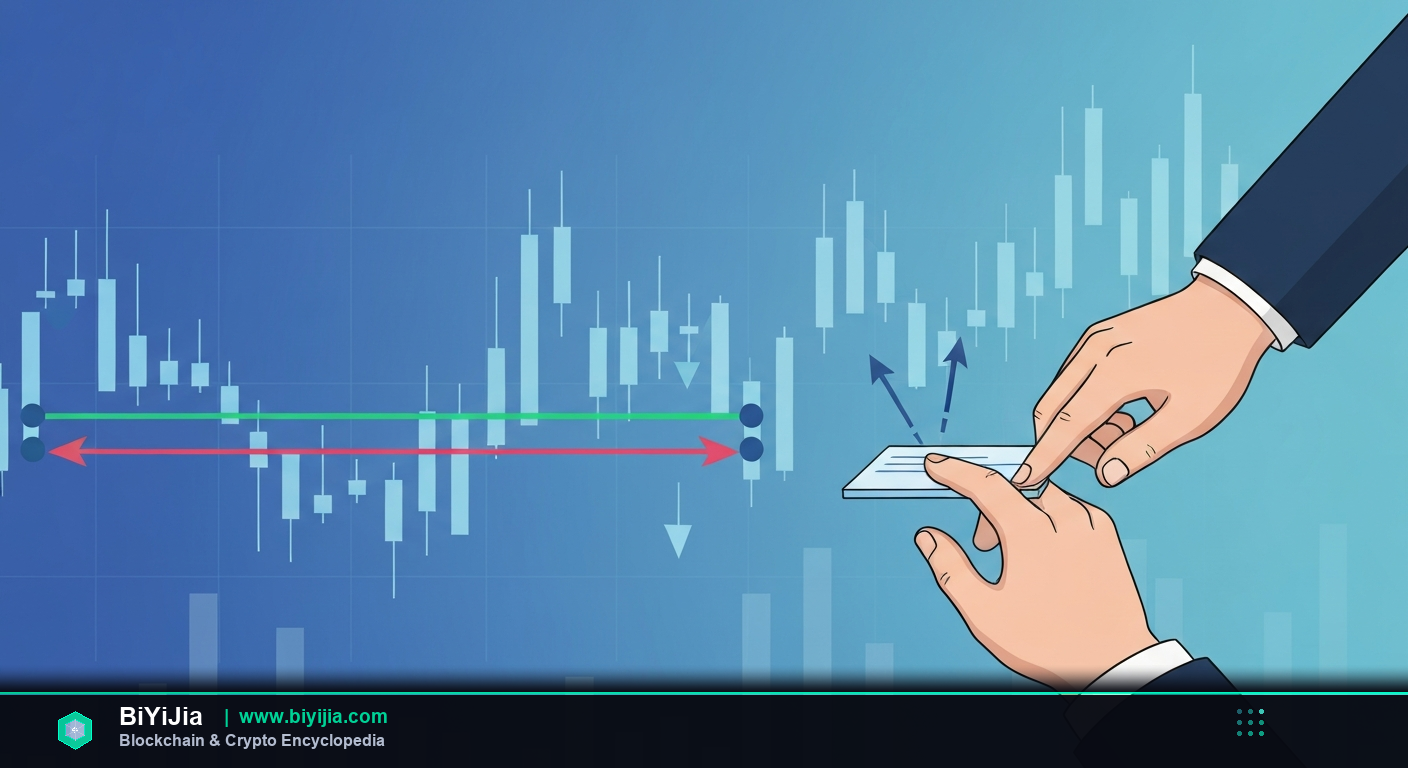
Arbitrage is the act of buying a cryptocurrency on one Exchange where it’s cheap and selling it on another where it’s pricey, locking in a profit.
In technical terms, arbitrage leverages the Price Difference that naturally occurs because each Exchange operates independently, with its own order books, liquidity pools, and user base. When a price gap appears, traders—often bots—move funds across platforms, execute opposite trades, and settle the net spread before the market can correct itself.
Think of it like spotting a $5 discount on a popular sneaker at Store A while Store B is charging full price; you buy the cheap pair, flip it at the higher price, and pocket the difference—all before anyone else notices the sale.
How It Works
- Identify a Price Difference between two or more Exchanges for the same crypto asset.
- Secure the required capital—sometimes via a Flash Loan if you lack upfront funds.
- Execute a simultaneous buy on the lower‑priced Exchange and a sell on the higher‑priced Exchange.
- Settle the trades, withdraw the profit, and repeat the cycle as soon as new gaps appear.
- Monitor transaction fees and network latency to ensure the spread remains profitable after costs.
Core Features
- Speed: Arbitrage relies on sub‑second execution to outrun market‑making algorithms.
- Low‑Risk Profile: Theoretically risk‑free because the buy and sell happen almost simultaneously.
- Automation: Most profitable opportunities are captured by bots programmed to scan dozens of Exchanges.
- Cross‑Platform Nature: It inherently involves multiple Exchanges, often across different blockchain networks.
- Capital Efficiency: Flash Loans let traders borrow large sums without collateral, using the arbitrage profit to repay instantly.
- Regulatory Ambiguity: Because crypto operates globally, arbitrage strategies may fall in gray zones of compliance.
Real-World Applications
- Binance Arbitrage Bot: A proprietary bot that scans Binance, Kraken, and Coinbase, generating an average daily profit of $12,000 in 2025 (CryptoQuant).
- DeFiSwap Flash Arbitrage: Uses Flash Loans on Aave to arbitrage between Uniswap V3 and SushiSwap, achieving a 0.3% spread per transaction.
- Hummingbot: Open‑source framework that lets anyone launch cross‑exchange arbitrage strategies without deep coding knowledge.
- Cross‑Platform Arbitrage Platforms: Services like ArbMatrix provide a dashboard that aggregates price feeds from 30+ Exchanges, automatically executing trades when spreads exceed 0.2%.
Comparison with Related Concepts
Arbitrage vs. Market Making: Market makers provide liquidity and earn the bid‑ask spread over time, while arbitrageurs seek instantaneous, temporary price gaps.
Cross‑Exchange Arbitrage vs. Intra‑Exchange Arbitrage: The former moves assets between different Exchanges; the latter exploits price differences within a single platform, such as between spot and futures markets.
Flash Loan Arbitrage vs. Traditional Capital Arbitrage: Flash Loans require no upfront capital, relying on the smart contract’s atomicity, whereas traditional arbitrage ties up funds in wallets or custodial accounts.
Risks & Considerations
- Slippage: Rapid price movement can erode the expected spread, especially on low‑liquidity pairs.
- Network Congestion: High gas fees or delayed block confirmations can turn a profitable arbitrage into a loss.
- Regulatory Scrutiny: Some jurisdictions treat arbitrage as a prohibited activity if it involves unregistered exchanges.
- Counterparty Risk: If an Exchange freezes withdrawals during a trade, the arbitrage cycle breaks.
- Flash Loan Reversion: If any step of a Flash Loan arbitrage fails, the entire transaction reverts, costing gas without profit.
Embedded Key Data
In Q4 2025, arbitrage bots captured roughly $2.3 billion in profit across major crypto Exchanges, according to Messari’s quarterly report.
Cross‑exchange arbitrage volume grew 42 % year‑over‑year in 2025, as reported by Kaiko, reflecting tighter spreads and faster execution engines.
Frequently Asked Questions
What is crypto arbitrage and how does it differ from regular arbitrage?
Crypto arbitrage applies the same principle of exploiting price differences, but it happens on digital asset markets that operate 24/7, are highly fragmented, and often involve blockchain‑based transaction costs.
Can I do arbitrage trading without programming skills?
Yes. Platforms like Hummingbot and ArbMatrix offer user‑friendly interfaces and pre‑built strategies, allowing non‑technical traders to launch arbitrage bots with a few clicks.
Is cross‑exchange arbitrage profitable after fees?
Profitability hinges on the spread exceeding the sum of trading fees, withdrawal fees, and gas costs. In high‑liquidity pairs like BTC/USDT, spreads of 0.2 % can still be viable after accounting for typical fees.
Do Flash Loans make arbitrage risk‑free?
Flash Loans eliminate the need for upfront capital, but they still expose you to execution risk, gas spikes, and contract bugs. If any step fails, the whole transaction reverts, costing you the gas spent.
How do regulators view crypto arbitrage?
Regulatory treatment varies. Some jurisdictions consider it a legitimate trading activity, while others may view cross‑border arbitrage as a form of unregistered securities trading, especially if leveraged.
Summary
Arbitrage is the practice of locking in risk‑free profits by buying low on one Exchange and selling high on another, a cornerstone of Decentralized Finance (DeFi) trading strategies. Mastering arbitrage—whether via bots, Flash Loans, or manual execution—can boost returns, but it demands vigilance around fees, latency, and regulatory nuances. For deeper insight, explore related concepts like Price Difference, Exchange dynamics, and Cross‑Platform trading.