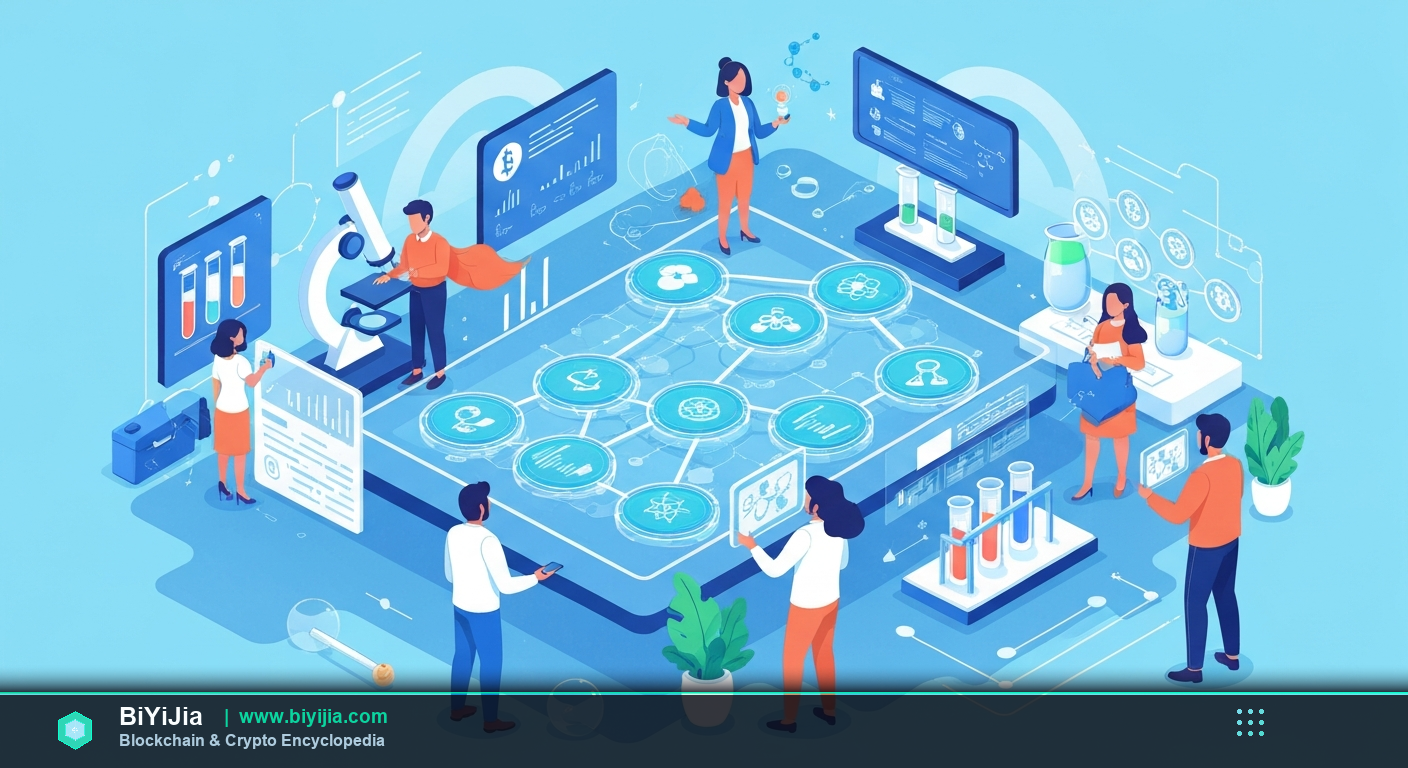
DeSci (Decentralized Science) refers to a blockchain‑based movement that lets researchers fund, share, and tokenize scientific work without traditional gatekeepers.
Key Takeaways
- Definition: DeSci uses decentralized networks to democratize research funding, data sharing, and credit allocation.
- Core features: Token‑curated funding pools, immutable publishing, and community‑governed DAOs.
- Real‑world use: Platforms like Molecule, VitaDAO, and LabDAO already issue science tokens and sponsor experiments.
- Traditional vs. DeSci: Unlike legacy grant agencies, DeSci removes central bottlenecks and lets anyone become a patron.
- Risk warning: Regulatory uncertainty and token volatility can jeopardize long‑term project viability.
What Is DeSci (Decentralized Science)?
DeSci is the application of blockchain technology to create open, community‑driven ecosystems for scientific research.
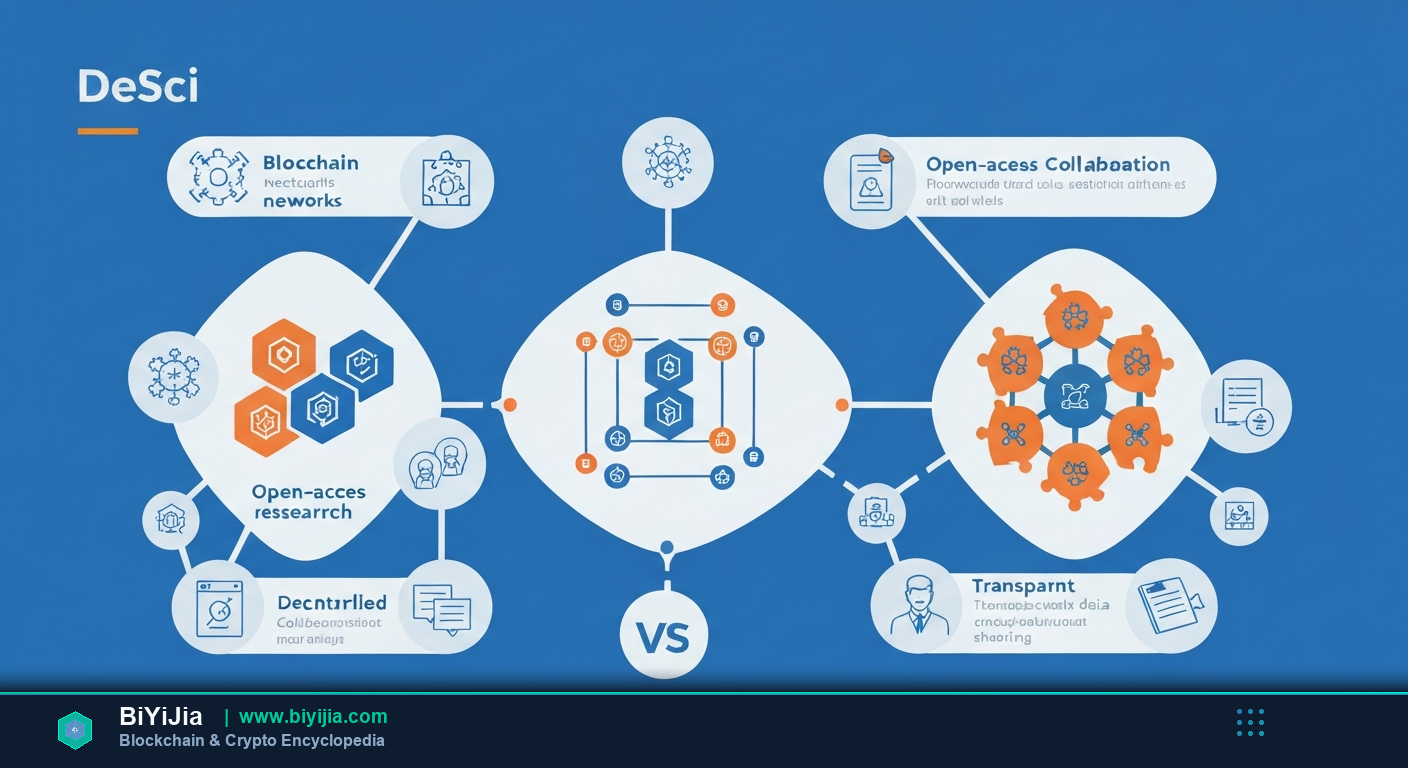
In technical terms, DeSci builds on smart contracts, token economics, and decentralized autonomous organizations (DAOs) to replace legacy grant committees, journal paywalls, and proprietary data silos. Researchers submit proposals as on‑chain metadata, backers stake crypto tokens, and outcomes are recorded immutably, ensuring transparent attribution and traceable impact.
Think of it like a crowdfunding platform for science, but instead of a single founder’s Kickstarter page, the whole community collectively decides which experiments get funded, and every contribution is encoded in a public ledger.
How It Works
- Proposal submission: A scientist creates a digital research proposal, attaching data hashes and methodology outlines to a smart contract.
- Community vetting: Token holders vote on the proposal’s merit; the weight of each vote is proportional to staked tokens.
- Funding allocation: Approved proposals receive pooled cryptocurrency, often in the form of a dedicated science token.
- Execution & reporting: Researchers conduct the work, uploading results to IPFS or another decentralized storage; the hash is linked back to the original contract.
- Reward distribution: Upon successful verification, tokens are minted or distributed to contributors, reviewers, and the research team according to pre‑agreed rules.
Core Features
Token‑Curated Registries (TCRs): A decentralized list where only proposals that meet community standards can enter, ensuring quality control without a central editor.
Immutable Publishing: Research outputs are stored on decentralized storage, making tampering practically impossible and guaranteeing long‑term accessibility.
DAO Governance: Decision‑making power rests with token‑holding members, allowing rapid, transparent funding cycles and policy updates.
Science Tokenization: Intellectual property, datasets, and even experimental reagents can be represented as NFTs or utility tokens, enabling fractional ownership and secondary markets.
Reputation Mining: Reviewers earn reputation tokens for providing valuable feedback, aligning incentives for rigorous peer review.
Real-World Applications
- Molecule: A platform that issues research tokens to fund early‑stage biotech projects; over $150 million in token‑backed grants have been allocated since 2023.
- VitaDAO: Focuses on longevity research; its native VITA token has financed 12 peer‑reviewed studies, attracting $45 million in community capital.
- LabDAO: Enables scientists to lease lab equipment via NFTs; the network reports a 30 % increase in equipment utilization across partnered facilities.
- OpenScience Network: A decentralized journal that publishes papers as immutable NFTs; it has indexed more than 5,000 articles by early 2026.
- ResearchCoin: A utility token used by multiple universities to reward student‑led experiments; its ecosystem now supports $20 million in annual research budgets.
Comparison with Related Concepts
DeSci vs Traditional Grant Funding: Traditional grants rely on a handful of reviewers and long bureaucratic cycles, while DeSci leverages token‑based voting for near‑instant allocation and global participation.
DeSci vs Open Access Publishing: Open access removes paywalls but still depends on centralized publishers; DeSci adds immutable storage and tokenized credit, ensuring both free access and verifiable provenance.
DeSci vs Decentralized Finance (DeFi): DeFi reshapes how we move money; DeSci reshapes how we create, validate, and fund knowledge.
Risks & Considerations
Regulatory Uncertainty: Many jurisdictions have not yet defined how science tokens are treated, creating legal gray areas for researchers and investors.
Token Volatility: Funding pools denominated in volatile crypto can fluctuate dramatically, potentially leaving projects under‑funded mid‑experiment.
Governance Attacks: Concentrated token holdings can enable a small group to dominate DAO decisions, undermining the democratic premise of DeSci.
Data Privacy: While immutability is a strength, publishing raw data on a public ledger may conflict with privacy regulations in fields like genomics.
Technical Barriers: Researchers unfamiliar with blockchain tooling may face steep learning curves, slowing adoption.
Embedded Key Data
According to a 2025 report by the Global Science Funding Alliance, DeSci platforms have raised over $1.2 billion in research grants, a 250 % increase from 2022.
A 2024 survey of 3,000 scientists showed that 42 % would consider publishing on a blockchain‑based journal, up from 15 % in 2020.
Frequently Asked Questions
What is DeSci and how does it differ from traditional science funding?
DeSci (Decentralized Science) replaces central grant agencies with community‑run DAOs that allocate crypto tokens to proposals. This model speeds up funding cycles, broadens the pool of potential backers, and records every transaction on an immutable ledger, unlike the opaque, slow processes of legacy institutions.
Can I earn money by participating in DeSci projects?
Yes. Contributors can earn tokens by funding proposals, reviewing research, or providing infrastructure. Those tokens often appreciate in value as successful studies generate royalties or licensing fees, creating a feedback loop that rewards active participants.
Is DeSci safe for my research data?
Data stored on decentralized networks like IPFS is cryptographically hashed, making it tamper‑proof. However, you must still consider privacy regulations and possibly encrypt sensitive datasets before uploading.
Do I need to be a crypto expert to join a DeSci DAO?
Not necessarily. Many platforms offer user‑friendly interfaces that abstract away the underlying blockchain mechanics. That said, a basic understanding of wallets and token economics helps you navigate voting and reward structures more effectively.
How are intellectual property rights handled in DeSci?
IP can be tokenized as NFTs, allowing fractional ownership and automated royalty distribution via smart contracts. This approach can coexist with existing patent systems, but legal frameworks are still evolving.
Summary
DeSci (Decentralized Science) leverages blockchain, token economics, and DAO governance to democratize research funding, data sharing, and credit allocation. As the ecosystem matures, it promises to complement traditional mechanisms while reshaping how knowledge is created and rewarded. Explore related concepts such as Research Funding, Knowledge Sharing, DAO, and Science Tokenization to see the full picture.