

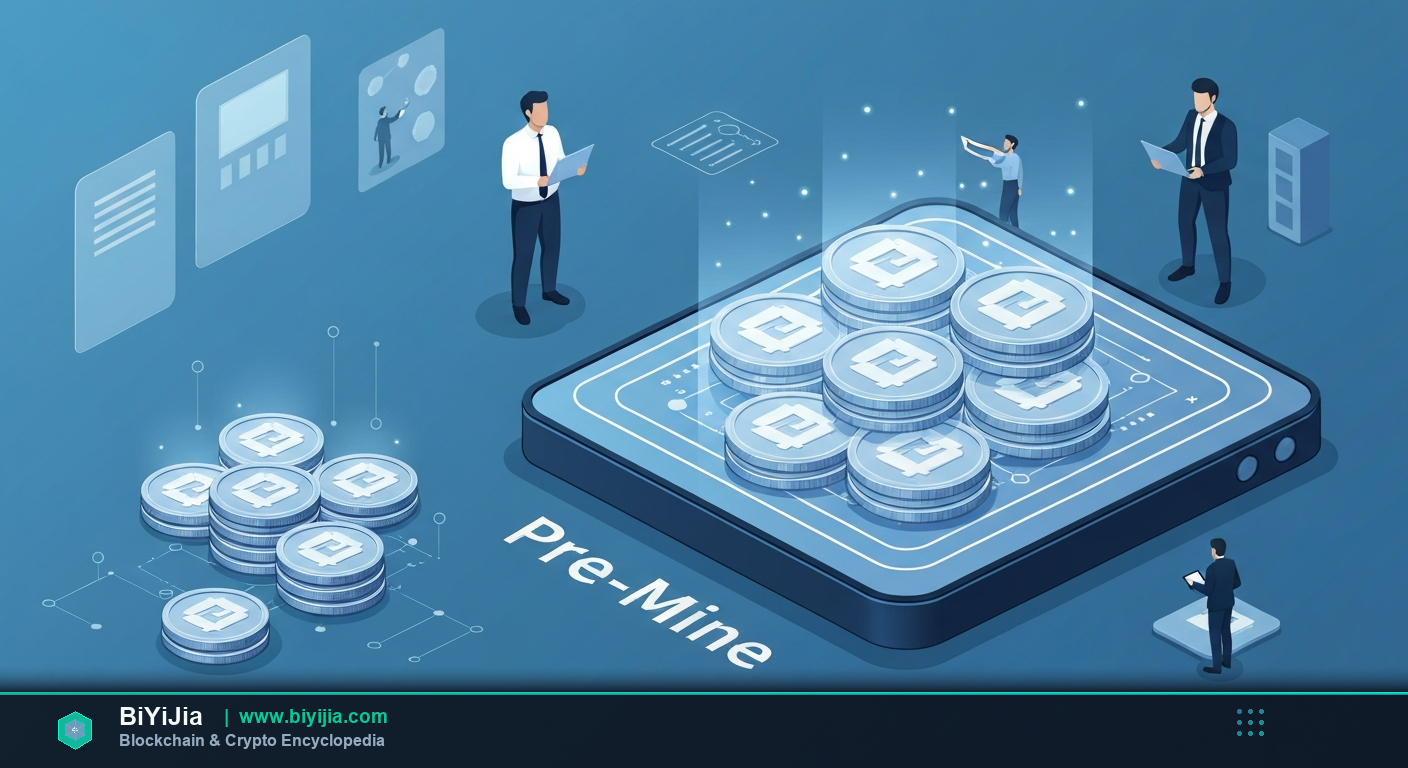
Pre‑Mine refers to the practice of creating a portion of a cryptocurrency’s total supply before the public launch, often reserved for founders, investors, or early contributors.
Key Takeaways
- Pre‑mine is a pre‑allocation of tokens before a network goes live.
- It allows teams to fund development, marketing, and ecosystem incentives early on.
- Projects like Filecoin and EOS used pre‑mined tokens to bootstrap their ecosystems.
- Compared to a fair launch, pre‑mine concentrates power and can spark trust issues.
- Investors should watch for pre‑mine controversy, especially around transparency and lock‑up periods.
What Is Pre-Mine?
In plain language, a pre‑mine is when a crypto project creates some of its tokens before the blockchain is opened to the public.
Technically, the genesis block (or an early block) contains a fixed amount of coins that are assigned to specific wallets, bypassing the usual mining or staking reward schedule. This allocation is hard‑coded into the protocol, so the tokens exist from day one but are not distributed through the normal consensus mechanism.
Think of it like a bakery that bakes a batch of pastries before opening its doors and sets aside a few pies for the owners and staff; the rest are sold to customers once the shop opens.
How It Works
- Developers design the tokenomics and decide what percentage of the total supply will be pre‑mined.
- During the network’s genesis configuration, they embed the pre‑mined amount into specific wallet addresses.
- These wallets are usually subject to vesting schedules or lock‑up contracts to prevent immediate dumping.
- The blockchain launches, and the remaining supply becomes available through mining, staking, or other distribution mechanisms.
- Community monitors the pre‑mined wallets to ensure the promised lock‑up terms are respected.
Core Features
Early Funding: Provides immediate capital for development, legal work, and marketing before any user‑generated revenue.
Controlled Supply: Allows the team to set aside a known percentage of the total token pool, aiding predictability.
Vesting & Lock‑up: Often paired with smart‑contract vesting to align incentives and reduce market shock.
Governance Weight: Pre‑mined tokens can carry voting power, shaping early protocol decisions.
Transparency Requirement: Successful projects publish the exact amount, addresses, and release schedule to build trust.
Real-World Applications
- Filecoin – 70% of its 2 billion FIL supply was pre‑mined for miners and investors; the token launched in 2020 with a $2.5 billion market cap.
- EOS – Reserved roughly 20% of its 1 billion EOS for the founding team and early backers, with a 4‑year vesting plan.
- Algorand – Allocated 6% of its 10 billion ALGO as a pre‑mine to the Algorand Foundation for ecosystem grants.
- Polkadot – Set aside 10% of its 1 billion DOT as a pre‑mine for the Web3 Foundation and core developers.
- Solana – Pre‑mined 42% of its 508 million SOL to the Solana Labs team, later released via a multi‑year schedule.
Comparison with Related Concepts
Pre‑Mine vs Fair Launch: A fair launch issues all tokens through mining or staking from day one, leaving no special allocation, whereas a pre‑mine concentrates a chunk for insiders before anyone else can earn.
Pre‑Mine vs Token Distribution: Token distribution describes the overall plan for who gets what, including airdrops, sales, and community rewards; pre‑mine is just one slice of that broader picture.
Pre‑Mine vs Team Allocation: Team allocation can be part of a broader distribution strategy and may include performance‑based grants, while pre‑mine is a one‑time creation of tokens before launch.
Pre‑Mine vs Controversy: The controversy stems from perceived unfairness, potential price manipulation, and lack of transparency, issues that are less pronounced in projects that opt for a fair launch.
Risks & Considerations
Centralization Risk: Large pre‑mined holdings can give a handful of wallets outsized influence over governance and market dynamics.
Price Dumping: If vesting schedules are short or ignored, sudden sales can crash the token price, harming later investors.
Trust Deficit: Projects that hide the size or purpose of pre‑mined tokens often face community backlash and reduced adoption.
Regulatory Scrutiny: Pre‑mined tokens may be classified as securities in certain jurisdictions if they constitute an investment contract.
Liquidity Issues: Early concentration of tokens can limit the amount available for liquidity pools, affecting trade execution.
Embedded Key Data
According to a 2025 CoinGecko report, 12% of all tokens launched between 2022 and 2024 featured a pre‑mine of at least 15% of total supply.
A study by the Blockchain Research Institute in 2024 found that projects with transparent pre‑mine disclosures experienced 30% lower post‑launch volatility than those that did not.
Frequently Asked Questions
What is pre‑mine and how does it differ from mining?
A pre‑mine creates tokens before the network is live, assigning them to specific wallets, whereas mining generates new tokens through computational work after launch.
Why do projects choose to pre‑mine tokens?
Teams use pre‑mines to secure early funding, reward founders, and set aside resources for ecosystem development, often under a vesting schedule to align incentives.
Is a pre‑mine always a red flag for investors?
Not necessarily. Transparency, clear lock‑up periods, and a solid use‑case can mitigate concerns, but hidden or overly large pre‑mines often raise trust issues.
How can I verify the size of a pre‑mine?
Check the project’s whitepaper, GitHub genesis file, or blockchain explorer for the exact allocation and associated vesting contracts.
Can pre‑mined tokens be used for governance?
Yes, many protocols grant voting rights to pre‑mined holdings, which can give early contributors a strong voice in protocol upgrades.
What impact does a pre‑mine have on token distribution?
Pre‑mined tokens are a slice of the overall distribution plan; they reduce the amount available for public sales, airdrops, or community incentives.
Summary
Pre‑Mine is the practice of allocating a portion of a cryptocurrency’s supply before the network opens, providing early funding but also introducing centralization and trust challenges. Understanding its role in Token Distribution, Fair Launch debates, and Team Allocation helps investors navigate the pre‑mine controversy and make informed decisions.