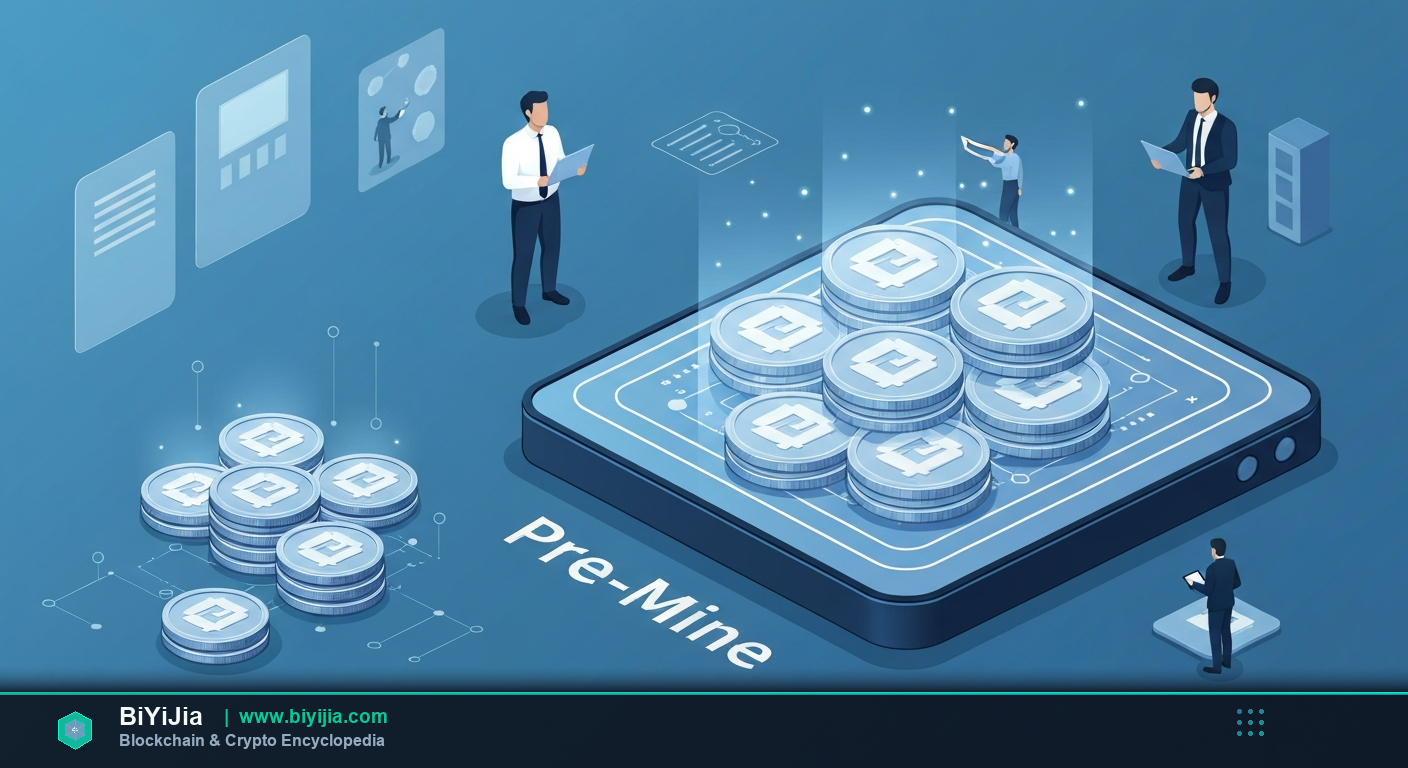
Tokenomics refers to the economic design of a cryptocurrency, covering its supply, distribution, incentives, and mechanisms that drive value and utility.
Key Takeaways
- Tokenomics is the economic blueprint that determines how a crypto token creates, distributes, and sustains value.
- Core features include supply rules, incentive structures, governance rights, and deflationary mechanisms.
- Projects use tokenomics to align participant behavior with network growth, from DeFi protocols to NFT marketplaces.
- Unlike traditional equity, token economics blend utility, speculation, and community governance.
- Poorly designed tokenomics can lead to hyperinflation, dump cycles, or regulatory scrutiny.
What Is Tokenomics?
Tokenomics is the study of how a crypto token’s economic parameters shape its utility and market behavior.
At its heart, tokenomics blends supply rules, distribution schedules, incentive mechanisms, and governance models to create a self‑balancing ecosystem. Think of it as a digital version of monetary policy: the protocol decides how many tokens exist, who gets them, and what actions earn or burn them. By codifying these rules on-chain, tokenomics removes the need for a central bank while still guiding price dynamics.
Imagine a board game where the rulebook tells you how many chips each player starts with, how you earn more chips, and when chips are removed from play. That rulebook is the tokenomics, and the chips are the tokens you trade.
How It Works
- Define the total supply. The protocol sets a hard cap, a dynamic cap, or an infinite issuance model, which determines the ceiling for token creation.
- Plan distribution. Tokens are allocated to founders, investors, ecosystem funds, and community rewards according to a pre‑announced schedule.
- Embed incentives. Staking, liquidity mining, or fee sharing mechanisms reward participants for securing or using the network.
- Implement deflationary tools. Token burns, buy‑backs, or transaction taxes reduce circulating supply over time.
- Governance and adjustment. On‑chain voting allows token holders to tweak parameters, ensuring the model can evolve with market conditions.
Core Features
- Supply Model: Determines whether the token has a fixed, capped, or elastic supply, influencing scarcity and inflation.
- Distribution Mechanics: Outlines how tokens are initially allocated and released, affecting early‑stage market dynamics.
- Incentive Alignment: Uses staking, rewards, or fees to motivate behaviors that support network security and growth.
- Deflationary Controls: Token Burn or buy‑back schemes that shrink the circulating supply to counteract inflation.
- Governance Framework: Empowers token holders to propose and vote on protocol upgrades, keeping the economics adaptable.
- Utility Integration: Embeds the token into the platform’s core functions—paying fees, accessing services, or voting rights.
Real-World Applications
- Uniswap (UNI): A decentralized exchange token that grants fee sharing and governance; over 1.4 billion UNI have been distributed as of 2026.
- Aave (AAVE): Lends and borrows crypto assets; staking AAVE yields safety module rewards and reduces liquidation risk.
- Axie Infinity (AXS): Powers a play‑to‑earn ecosystem; token burns are tied to in‑game purchases, cutting supply by ~15% annually.
- Chainlink (LINK): Provides decentralized oracle services; node operators earn LINK for delivering off‑chain data, aligning incentives with data quality.
- Arbitrum (ARB): An optimistic rollup scaling solution; ARB token distribution includes a 5‑year vesting for the community treasury to fund ecosystem growth.
Comparison with Related Concepts
Tokenomics vs Supply: Supply is a component of tokenomics that defines how many tokens can exist, while tokenomics encompasses the whole economic design, including distribution and incentives.
Tokenomics vs Distribution: Distribution describes the initial and ongoing allocation of tokens; tokenomics decides why that allocation matters for network health.
Tokenomics vs Inflation/Deflation: Inflation/Deflation are outcomes of the supply rules and burn mechanisms embedded within tokenomics.
Tokenomics vs Token Burn: Token Burn is a specific deflationary tool; tokenomics determines when and how burns are triggered to support price stability.
Risks & Considerations
- Inflation Risk: An overly generous issuance schedule can dilute holder value and trigger price crashes.
- Centralization Risk: Heavy early allocation to founders or investors may concentrate voting power, undermining decentralization.
- Incentive Misalignment: Rewards that are too lucrative can encourage speculative behavior rather than genuine network usage.
- Regulatory Exposure: Tokens that resemble securities due to profit‑sharing structures may attract regulatory action.
- Governance Capture: If a single entity accumulates enough tokens, it can steer protocol changes that favor its interests.
According to Messari, the total market cap of tokenomics‑driven projects reached $1.2 trillion in Q2 2026, reflecting the growing importance of sound economic design. A CoinGecko survey showed 68% of investors consider tokenomics the top factor when evaluating a new token, underscoring its influence on investment decisions.
Frequently Asked Questions
What is tokenomics and why does it matter?
Tokenomics is the set of economic rules governing a crypto token’s supply, distribution, incentives, and governance. It matters because those rules directly affect token utility, price stability, and participant behavior.
How does token burn affect token price?
Burning removes tokens from circulation, reducing supply. When demand stays constant or rises, a lower supply can create upward price pressure, similar to a share buy‑back in traditional markets.
Can tokenomics be changed after launch?
Most protocols embed governance mechanisms that let token holders vote on parameter adjustments. However, changes often require a super‑majority to prevent unilateral tampering.
Is tokenomics the same as token utility?
No. Token utility describes what the token can do within a platform (pay fees, vote, etc.), while tokenomics outlines how those utilities are incentivized and balanced across the ecosystem.
Do all DeFi (Decentralized Finance) projects need tokenomics?
While not mandatory, most DeFi protocols issue a native token to align incentives, fund development, and enable governance. Well‑crafted tokenomics can be a decisive competitive advantage.
What are common mistakes in designing tokenomics?
Common pitfalls include unlimited inflation, excessive early concentration, unclear incentive structures, and ignoring regulatory classification. These mistakes often lead to price volatility or legal challenges.
Summary
Tokenomics is the economic blueprint that shapes a cryptocurrency’s supply, distribution, incentives, and governance, directly influencing its utility and market behavior. Mastering tokenomics helps investors and builders assess project health and aligns network participants toward sustainable growth. For deeper insight, explore related concepts such as Supply, Distribution, Inflation/Deflation, and Token Burn.