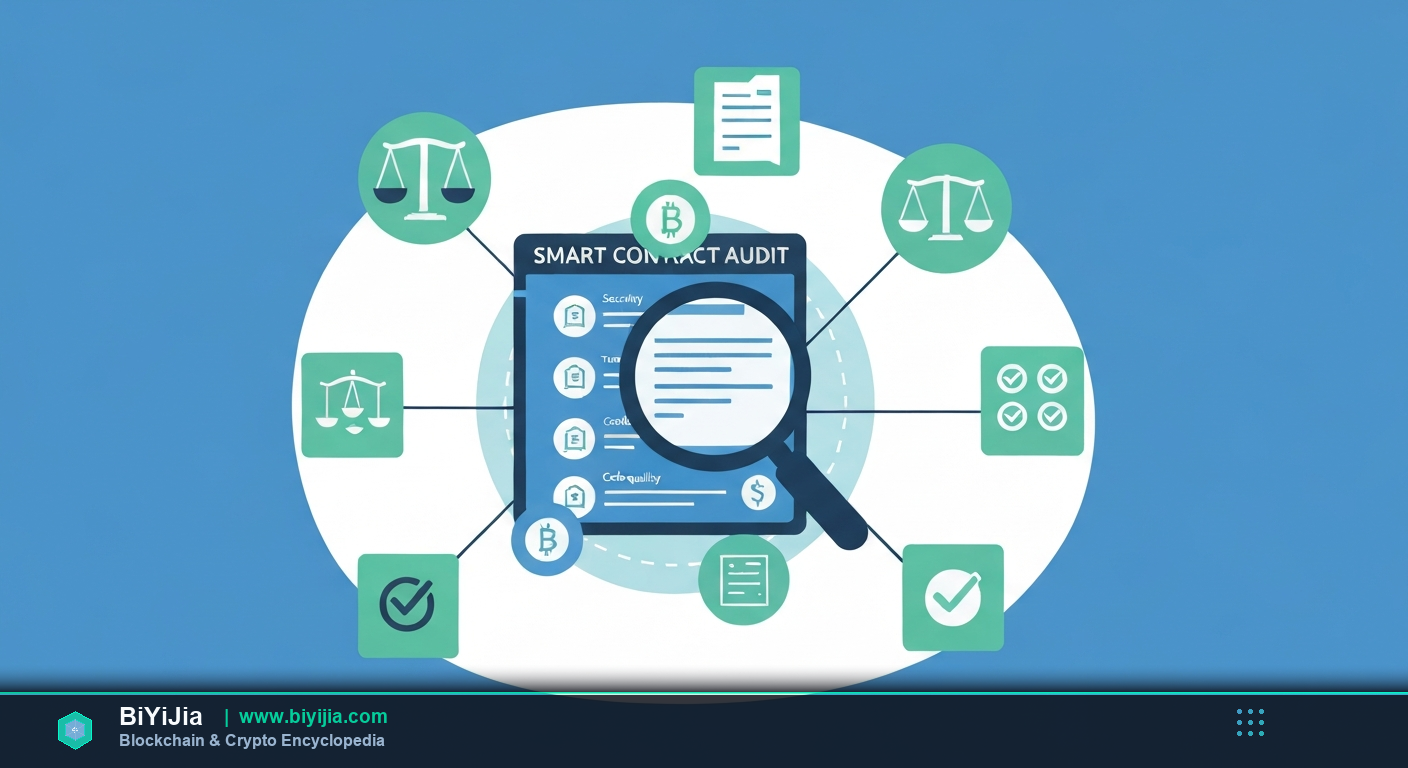
Smart Contract Audit is a systematic, third‑party review of blockchain code that identifies vulnerabilities, verifies logic, and ensures the security of decentralized applications.
Key Takeaways
- Definition: A thorough, independent analysis of a smart contract’s source code and behavior.
- Core features include static analysis, dynamic testing, and formal verification.
- Real‑world application: Used before launching DeFi protocols, NFTs, and token sales.
- Compared to traditional code audit, it focuses on immutable, trust‑less environments.
- Risk warning: Even audited contracts can be exploited if the audit scope is limited.
What Is Smart Contract Audit?
In plain language, a smart contract audit is a professional security check that looks for bugs and economic flaws before a contract goes live.
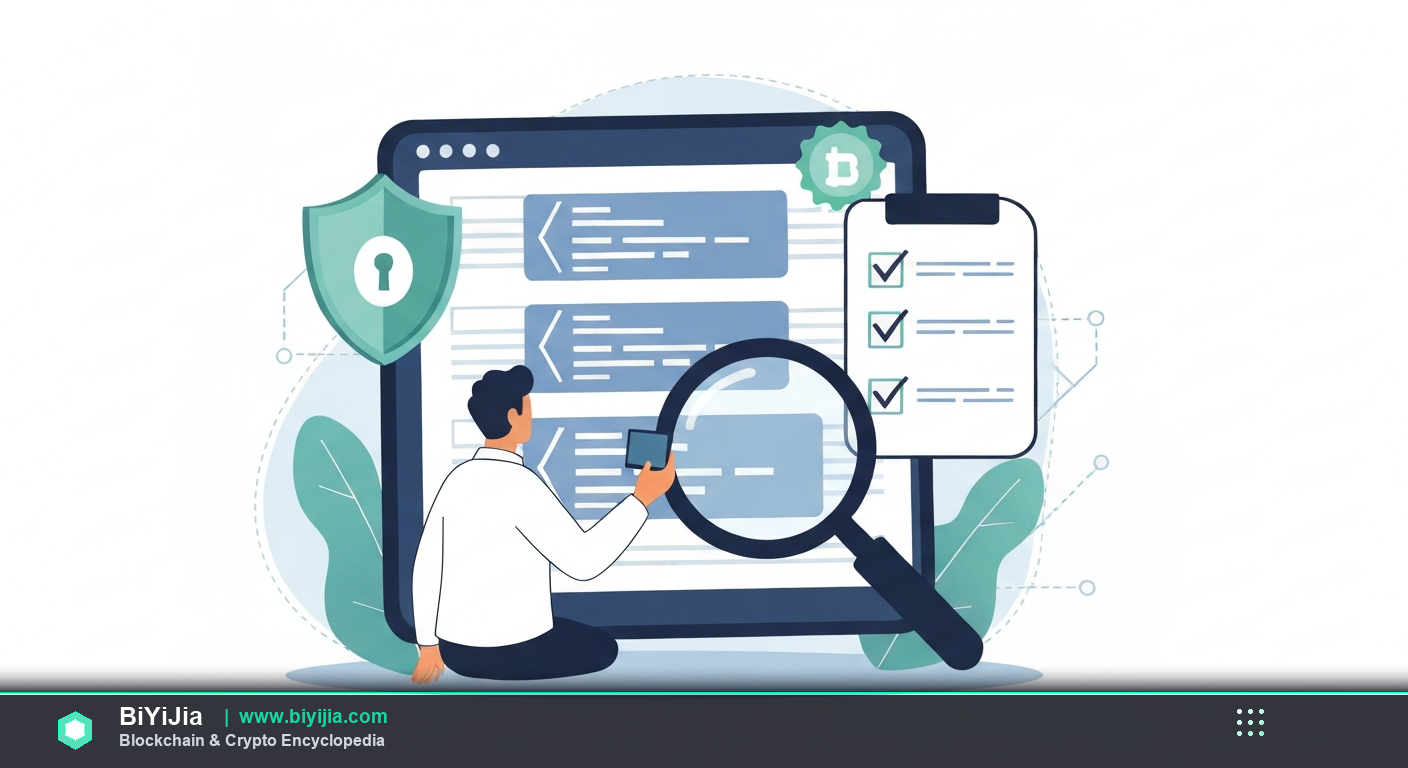
Technically, auditors examine the Solidity (or other language) source, run static analysis tools, simulate transactions on testnets, and sometimes apply formal methods to mathematically prove correctness. The goal is to surface any code paths that could let an attacker drain funds, manipulate state, or cause unintended behavior.
Think of it like hiring a building inspector before a skyscraper opens: you’re not building a house you can tear down later; once the contract is deployed, it’s permanent, so you need that pre‑flight safety check.
How It Works
- Scope definition – the client and auditor agree on which contracts, libraries, and upgrade mechanisms are included.
- Static code review – automated tools scan the source for known vulnerability patterns such as re‑entrancy or integer overflow.
- Dynamic testing – auditors run the contract on a forked testnet, fuzz inputs, and execute edge‑case scenarios.
- Formal verification (optional) – mathematical proofs are generated to guarantee certain invariants hold.
- Report delivery – a detailed document lists findings, severity grades, and remediation recommendations.
Core Features
- Static Analysis: Automated detection of common coding mistakes using tools like Slither or MythX.
- Dynamic Fuzzing: Randomized input generation to trigger unexpected contract states.
- Economic Modeling: Simulation of tokenomics and incentive structures to spot profit‑draining loops.
- Formal Verification: Mathematical proofs that critical functions cannot be subverted.
- Code Review: Human‑level inspection of logic, naming conventions, and access control.
- Audit Certification: A public attestation, often signed by firms like CertiK, that the audit was completed.
Real-World Applications
- Uniswap V3 – The automated market maker underwent a multi‑phase DeFi audit that uncovered a subtle price‑oracle issue, leading to a patch before mainnet launch.
- Aave V2 – A comprehensive contract audit identified re‑entrancy vectors, prompting a redesign of its flash‑loan module.
- OpenSea Marketplace – The NFT platform’s smart contract audit highlighted gas‑optimization opportunities, reducing transaction costs by 12%.
- Compound Governance – The audit verified that voting power delegation could not be hijacked, securing $3.4 B in assets (source: Compound Transparency Report 2025).
- Yearn Finance – A post‑deployment audit caught a hidden self‑destruct function, which was removed to protect $2.1 B locked in vaults.
Comparison with Related Concepts
Smart Contract Audit vs Traditional Code Audit: Traditional audits focus on software that can be patched; smart contract audits must assume immutable deployment, so they stress formal verification and economic safety.
Smart Contract Audit vs Vulnerability Assessment: A vulnerability assessment is a snapshot of known exploits, while a full audit includes deeper code logic review and economic modeling.
Smart Contract Audit vs Security Token Offering (STO) Review: STO reviews are regulatory‑centric, whereas smart contract audits are purely technical, ensuring the code behaves as intended.
Risks & Considerations
- Scope Creep: Limiting the audit to only selected modules can leave hidden attack surfaces untouched.
- False Sense of Security: An audit report does not guarantee future safety; new attack vectors can emerge.
- Auditor Expertise: Not all firms possess deep knowledge of emerging primitives like zk‑Rollups, leading to missed edge cases.
- Economic Flaws: Even bug‑free code can be gamed if token incentives are poorly designed.
- Replay Attacks: Audits that ignore cross‑chain interactions may overlook replay vulnerabilities.
Embedded Key Data
According to a 2025 DeFi security survey, 68% of projects that completed a professional smart contract audit reported no major exploits in the first year post‑launch (source: DeFi Safety Index 2025). In the same year, the total value secured by audited contracts exceeded $350 B, up from $210 B in 2022 (source: BlockSec Analytics).
Frequently Asked Questions
What does a smart contract audit actually test?
An audit evaluates code correctness, checks for known vulnerability patterns, runs simulated attacks, and often models economic incentives. It aims to certify that the contract cannot be exploited under normal operating conditions.
How much does a contract audit cost?
Pricing varies widely; a basic static analysis can start at $5,000, while a full formal verification for a complex DeFi protocol can exceed $150,000. Factors include code size, complexity, and the reputation of the audit firm.
Can an audit be done after deployment?
Post‑deployment audits are possible but less effective because the contract is already immutable. They can still uncover bugs for future upgrades via proxy patterns, but the safest practice is to audit before the first transaction.
Do all auditors use the same tools?
No. While many rely on open‑source scanners like Slither, MythX, or Manticore, leading firms such as CertiK also employ proprietary static analysis engines and formal verification frameworks tailored to their clients.
Is a smart contract audit enough to guarantee safety?
An audit dramatically reduces risk but does not eliminate it. Continuous monitoring, bug bounty programs, and community audits add layers of protection beyond the initial review.
Summary
Smart Contract Audit is a rigorous, third‑party examination of blockchain code that aims to uncover security flaws, logical errors, and economic vulnerabilities before deployment. By integrating static analysis, dynamic testing, and formal verification, audits protect billions of dollars locked in DeFi, NFTs, and other on‑chain applications. Understanding audit outcomes alongside concepts like Security and Code Review helps developers build more resilient protocols.