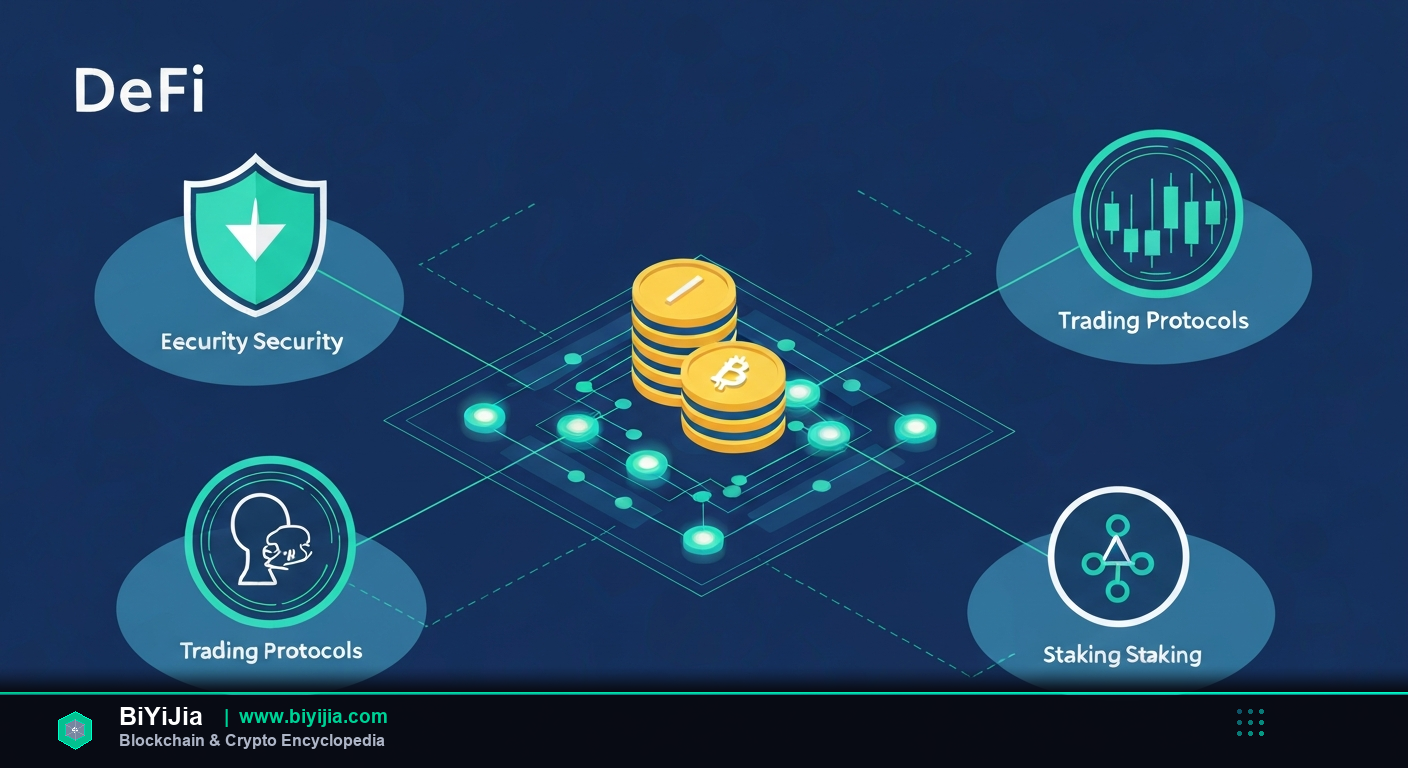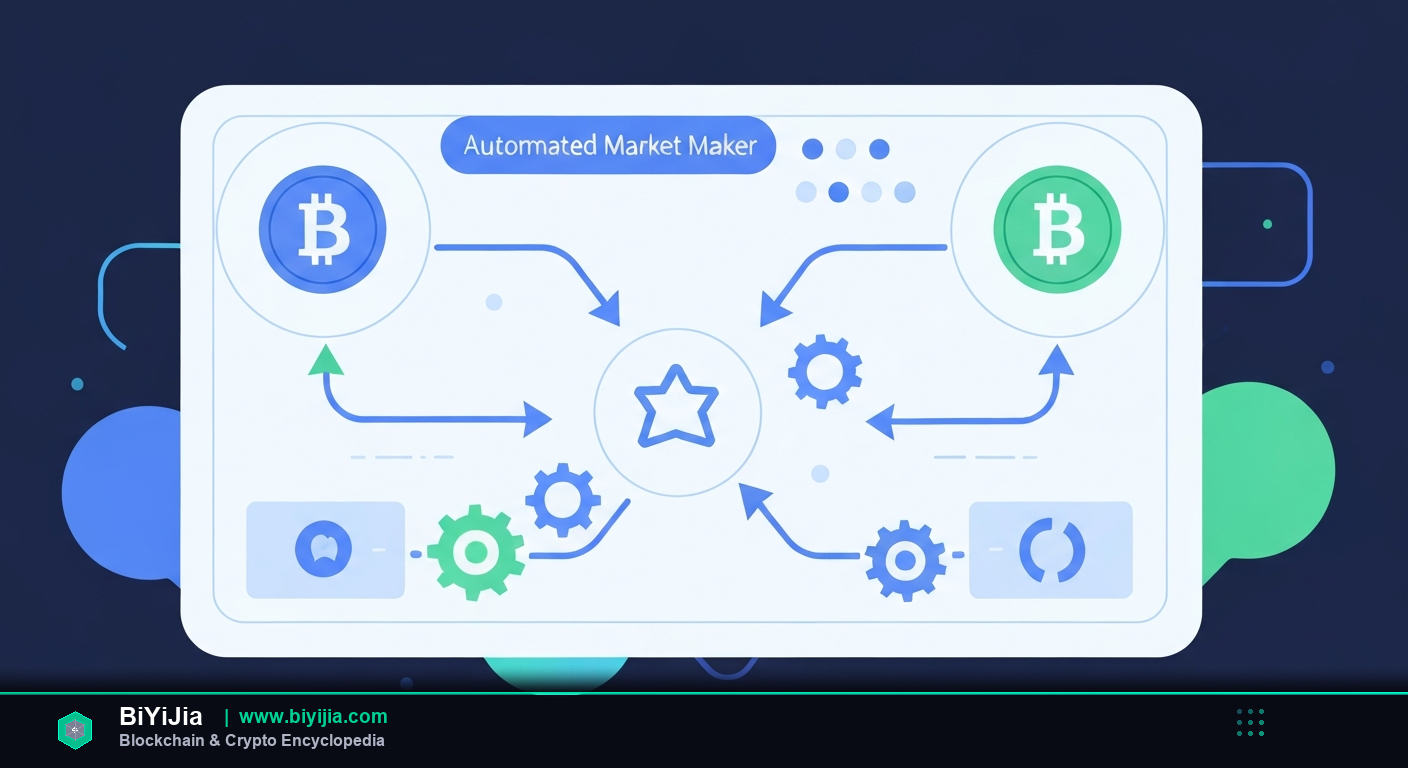
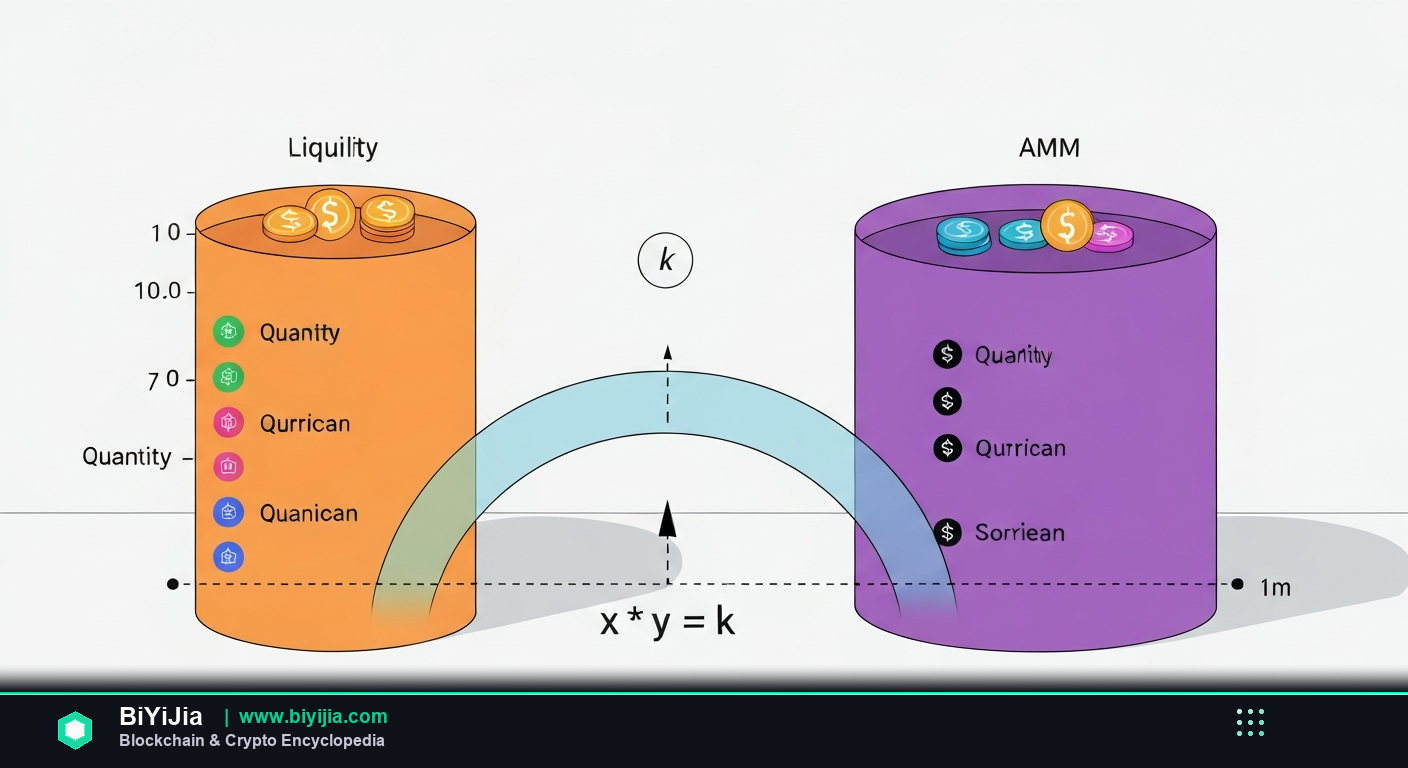
AMM (Automated Market Maker) refers to a decentralized protocol that uses smart contracts and liquidity pools to price and trade assets without a traditional order book.
Key Takeaways
- One‑line definition: An AMM is a smart‑contract‑driven system that swaps tokens using algorithmic pricing.
- Core features include constant‑product formulas, permissionless liquidity provision, and on‑chain price discovery.
- Real‑world use: Platforms like [internal link: Uniswap] let anyone trade ERC‑20 tokens instantly.
- Compared to centralized exchanges, AMMs eliminate order books and custodial risk.
- Risk warning: Impermanent loss and front‑running can erode returns for liquidity providers.
What Is AMM (Automated Market Maker)?
In plain language, an AMM is a set of smart contracts that let users trade tokens directly against a pool of liquidity instead of matching buyers and sellers.
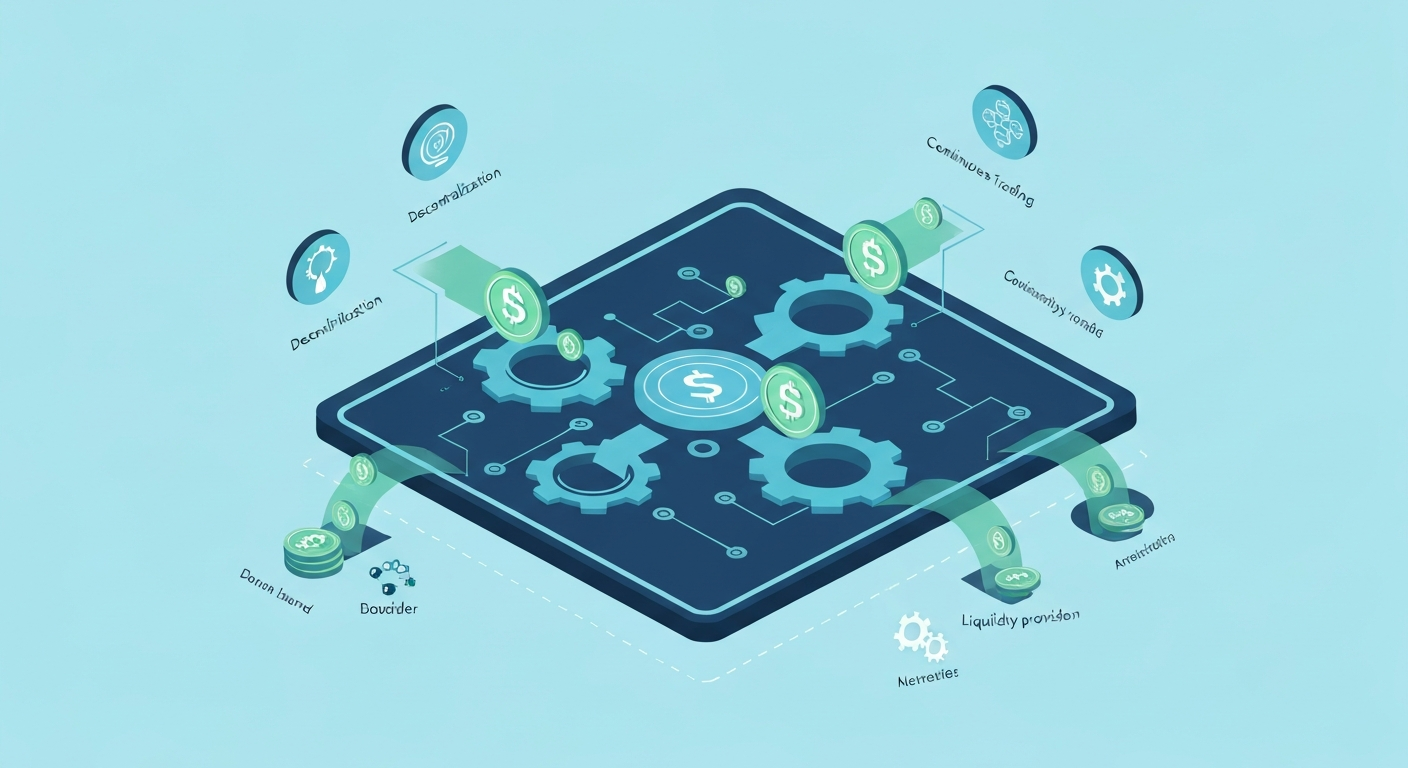
Technically, the system relies on a pricing curve—most commonly the constant‑product formula x·y=k—to determine how much of each asset you receive for a given input. When you swap, the contract adjusts the pool balances, preserving the invariant and automatically updating the price.
Think of an AMM like a vending machine: you drop in a coin (one token) and the machine dispenses a snack (another token) based on a preset price table that updates every time someone makes a purchase.
How It Works
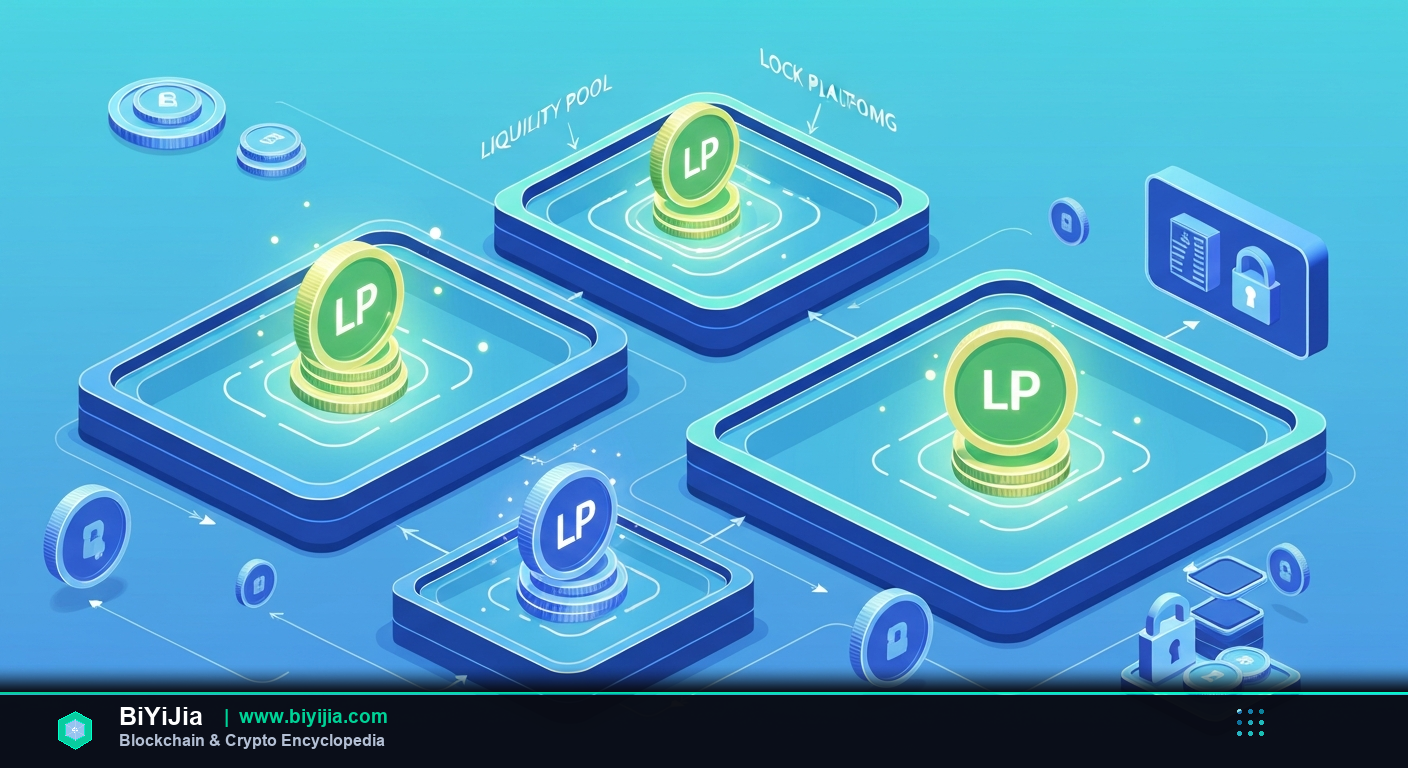
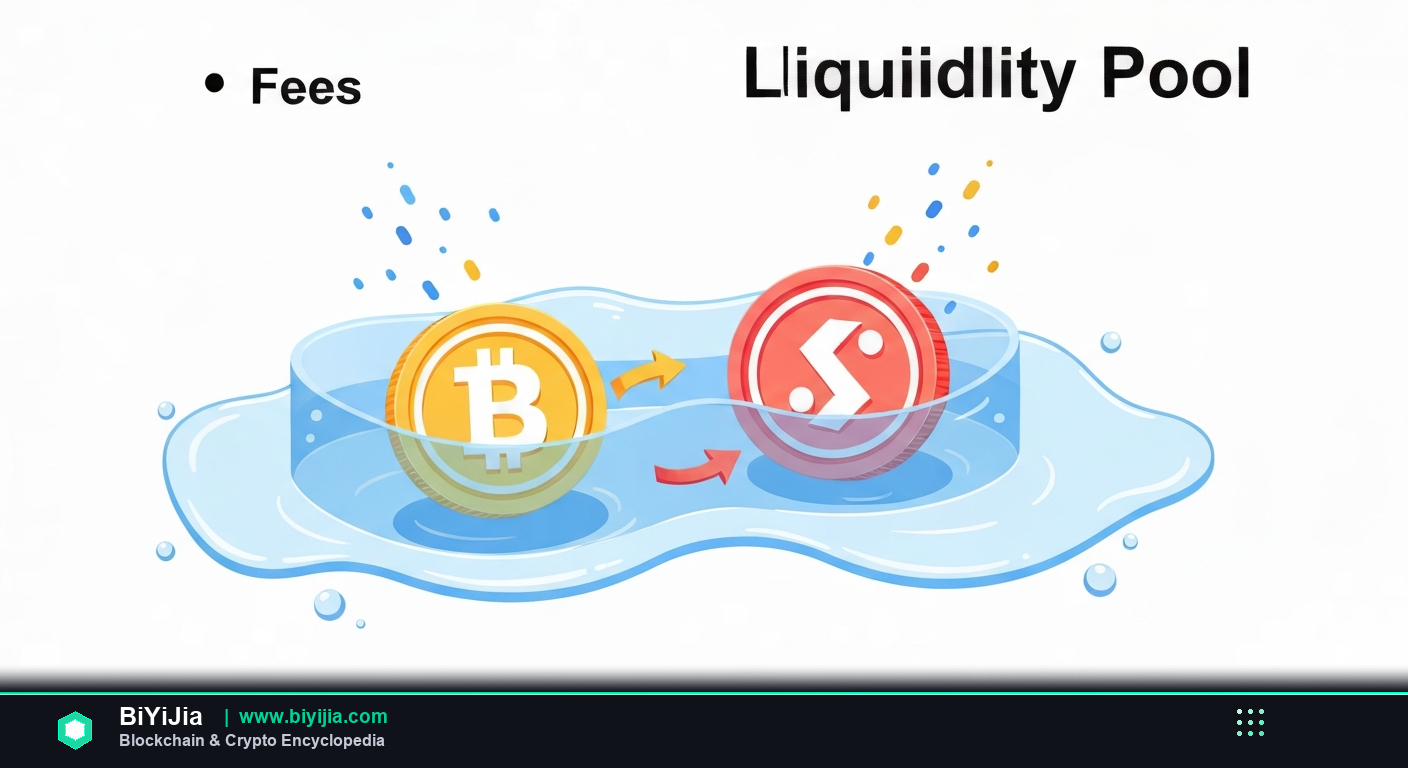
- Liquidity providers deposit equal values of two tokens into a smart contract, creating a [internal link: Liquidity Pool].
- The pool’s pricing algorithm (e.g., the constant‑product curve) calculates the exchange rate for any trade.
- A trader sends a swap request; the contract instantly adjusts the pool balances while keeping the invariant intact.
- The price slippage incurred by the trade is reflected in the new pool ratio, ensuring market depth.
- Liquidity providers earn a fraction of each trade as a fee, which accrues to the pool.
Core Features
Permissionless Liquidity Provision: Anyone can add assets to a pool without approval, democratizing market making.
Algorithmic Pricing: The most common model is the constant‑product formula (x·y=k), which guarantees that trades are always possible, albeit with varying slippage.
On‑Chain Settlement: All swaps settle directly on the blockchain, eliminating reliance on off‑chain order books.
Fee Structure: Pools charge a fixed percentage (often 0.3%) on each trade, distributed proportionally to liquidity providers.
Composable Architecture: AMM contracts can be nested or combined with other DeFi primitives, enabling complex strategies like yield farming.
Real-World Applications
- [internal link: Uniswap] – The flagship AMM on Ethereum, handling over $1.2 billion in daily volume (Q2 2026, Dune Analytics).
- SushiSwap – A multi‑chain AMM that adds incentivized token rewards on top of standard fees.
- Curve Finance – Optimized for stablecoin swaps, using a low‑slippage curve that reduces impermanent loss.
- PancakeSwap – The leading AMM on Binance Smart Chain, processing more than 45 million swaps per month (2026).
- Balancer – A flexible AMM that supports multi‑token pools with custom weightings.
Comparison with Related Concepts
AMM vs Order Book Exchange: AMMs price assets algorithmically and provide instant liquidity, while order books rely on matching counterparties and can suffer from thin depth.
AMM vs Centralized Exchange (CEX): Unlike CEXs, AMMs are non‑custodial, open‑source, and run entirely on‑chain, but they expose users to smart‑contract risk.
AMM vs Automated Liquidity Routing: Routing protocols (e.g., 1inch) aggregate liquidity from multiple AMMs for better rates; the underlying AMM mechanics remain the same.
Risks & Considerations
Impermanent Loss: When the relative price of pooled assets diverges, liquidity providers may earn less than simply holding the tokens.
Smart‑Contract Vulnerabilities: Bugs or exploits can drain pools; audits are essential but not a guarantee.
Front‑Running & Sandwich Attacks: Bots can detect large swaps and insert their own trades to profit at the expense of regular users.
Regulatory Uncertainty: Some jurisdictions may treat AMM pools as securities or unregistered trading platforms.
Liquidity Fragmentation: Multiple AMMs on the same chain can split liquidity, increasing slippage for each individual pool.
Key Data
According to Dune Analytics, AMM transaction volume hit $12.4 billion in Q4 2025, a 38% increase year‑over‑year.
DeFi Pulse reported that over 68% of all DeFi liquidity resides in AMM‑based pools as of June 2026.
Frequently Asked Questions
What is AMM and how does it differ from a traditional exchange?
An AMM (Automated Market Maker) uses smart contracts and a pricing algorithm to enable token swaps without an order book. Traditional exchanges match buyers and sellers, requiring a centralized matching engine and often custodial holdings.
Can I lose money as a liquidity provider?
Yes. Impermanent loss can occur when the price ratio of the pooled assets changes significantly. Fees earned may or may not offset that loss, depending on trade volume and price volatility.
Do I need to hold any special tokens to use an AMM?
No special tokens are required to trade. However, many AMMs issue governance tokens (e.g., UNI, SUSHI) that reward participants or grant voting rights.
How is slippage calculated in an AMM?
Slippage arises from the constant‑product curve: the larger the trade relative to pool size, the more the price moves. Some interfaces display an estimated slippage before you confirm.
Are AMMs safe from hacks?
While reputable AMMs undergo extensive audits, smart‑contract risk remains. Using well‑established platforms and diversifying across pools can mitigate exposure.
Summary
AMM (Automated Market Maker) technology powers the core of Decentralized Finance (DeFi) by enabling trustless, on‑chain token swaps through algorithmic pricing and liquidity pools. Understanding its mechanics, benefits, and risks helps you navigate the rapidly evolving DeFi ecosystem and explore related concepts like [internal link: Constant Product] and [internal link: Slippage].