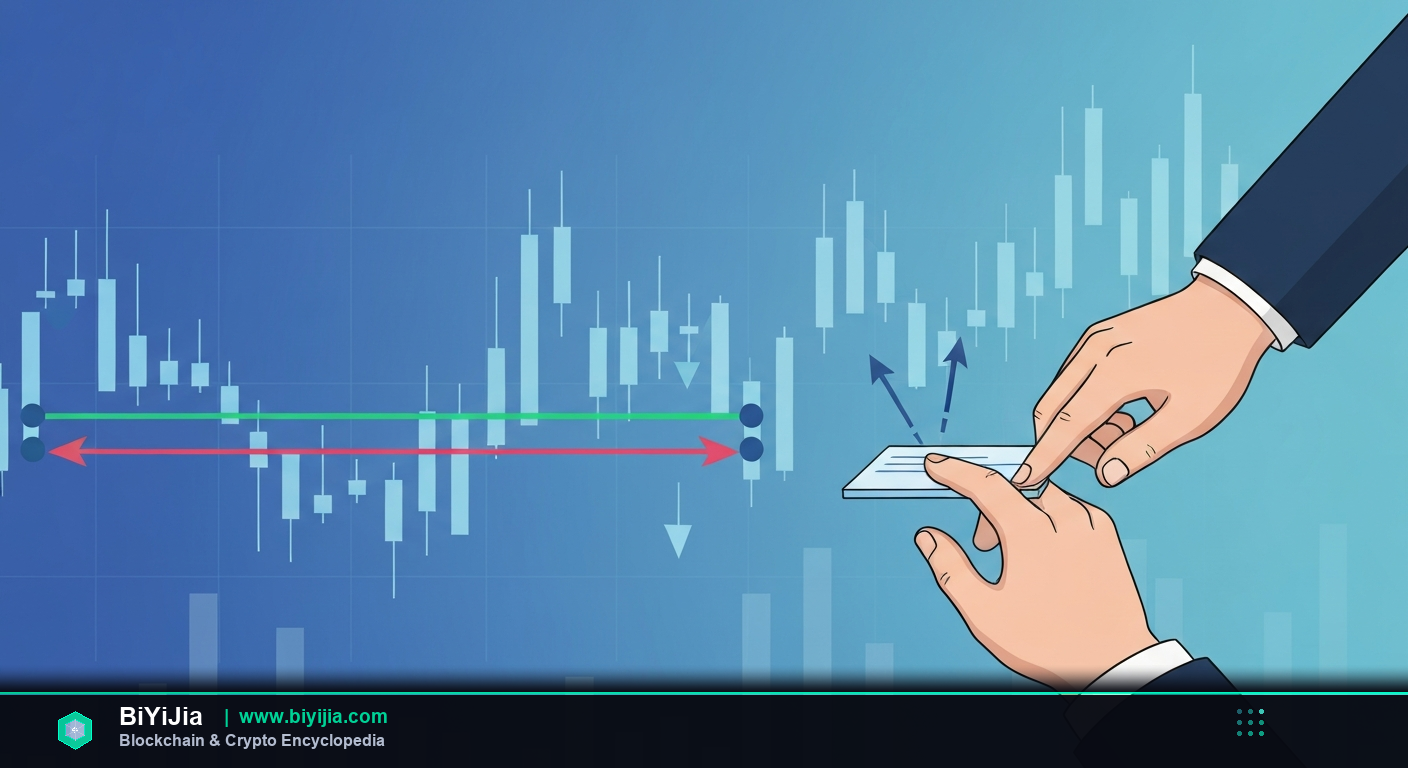
Candlestick Chart refers to a visual representation of price movement that displays open, high, low, and close values for each time interval, helping traders spot market sentiment at a glance.
Key Takeaways
- One‑line definition: A candlestick chart visualizes OHLC data as colored ‘candles’ for each period.
- Core features: body, wicks, color coding, and time‑frame flexibility.
- Real‑world application: Used by crypto exchanges, DeFi dashboards, and algorithmic bots.
- Comparison to traditional alternative: Offers richer visual cues than simple line charts.
- Risk warning: Misreading patterns can lead to false signals and losses.
What Is Candlestick Chart?
In plain language, a candlestick chart is a type of price chart that shows the opening, closing, high, and low of an asset for a given period.
Technically, each candle aggregates four data points—open, high, low, and close (OHLC)—and displays them as a rectangular body with thin lines (wicks) extending to the extremes. The body’s color tells you whether buyers (green or white) or sellers (red or black) controlled the session.
Think of it like a daily weather report: the high and low temperatures are the wicks, while the body represents the temperature range most people experienced, and the color indicates whether it felt warmer or cooler than the previous day.
How It Works
- Collect OHLC data for the chosen interval—whether it’s one minute, one hour, or one day.
- Draw a vertical line from the low to the high; this becomes the wick.
- Overlay a rectangle between the open and close; fill it green if close > open, red if close < open.
- Repeat the process across the timeline, aligning candles side‑by‑side.
- Overlay volume bars or technical indicators to add context.
Core Features
Body: The thick part shows the price range between opening and closing. A long body indicates strong momentum.
Wicks (Shadows): Thin lines extend above and below the body, marking the session’s extremes. Long wicks often signal rejection.
Color Coding: Green (or white) means price closed higher than it opened; red (or black) means the opposite.
Time‑frame Flexibility: Candles can represent anything from a single second to a month, letting traders zoom in or out.
Pattern Recognition: Repeating arrangements—like doji, hammer, or engulfing—form the basis of chart‑pattern analysis.
Integration with Volume: Pairing candles with volume bars helps confirm whether a move is backed by participation.
Real‑World Applications
- Binance Futures – Offers live candlestick charts for every crypto pair, letting traders spot entry points in real time.
- TradingView – Provides a K-line chart editor where users can script custom alerts based on candlestick patterns.
- Uniswap Analytics – Uses candlestick visualizations to display token price history alongside liquidity depth.
- MetaMask Swaps – Shows a compact candle view when previewing price impact across DeFi routes.
- Coinbase Pro – Integrates volume‑weighted average price (VWAP) overlays on candle charts for institutional traders.
Comparison with Related Concepts
Candlestick Chart vs Line Chart: Line charts merely connect closing prices, losing the nuance of intraperiod highs and lows that candles preserve.
Candlestick Chart vs OHLC Bar Chart: Both convey the same data, but candles bundle information into a visually intuitive shape, while bars separate each price point.
K-line Chart vs Candlestick Chart: K-line is the Chinese term for the same candle representation; the underlying mechanics are identical, though some Asian platforms label them as K‑lines.
Candlestick Chart vs Volume Profile: Volume profile focuses on traded volume distribution across price levels, whereas candlesticks focus on price action within a time slice.
Risks & Considerations
Pattern Overreliance: Assuming a pattern guarantees a move ignores market context and can cause premature entries.
Low Liquidity Distortion: In thin markets, wicks may be exaggerated by a single large order, misleading analysis.
Time‑frame Mismatch: A bullish pattern on a 5‑minute chart may be irrelevant on a daily chart; always align the horizon with your strategy.
Psychological Bias: Traders often see what they want to see; disciplined back‑testing helps mitigate confirmation bias.
Data Feed Latency: Delayed candle updates can cause missed signals, especially in high‑frequency environments.
Embedded Key Data
According to CoinMetrics, over 75% of active crypto traders rely on candlestick patterns for daily decisions (2025).
A study by the Blockchain Research Institute found that K‑line chart usage grew 42% year‑over‑year across major exchanges in 2024.
Frequently Asked Questions
What is a candlestick chart?
A candlestick chart is a graphical tool that displays the open, high, low, and close prices of an asset for each chosen time interval, using colored bodies and wicks to indicate market direction.
How do I read candlesticks?
Start by noting the candle’s color: green means the close is above the open, red means the opposite. Then examine the body length (momentum) and wick size (rejection). Recognize common patterns—like doji for indecision or engulfing for reversal—to gauge likely next moves.
Why are they called K‑line charts?
K‑line is simply the Mandarin translation of “candlestick.” Asian exchanges popularized the term, but the visual representation and analytical principles are the same as Western candlesticks.
Can candlestick patterns predict price?
Patterns provide probabilistic clues, not guarantees. Successful traders combine them with volume, trend lines, and macro context to improve odds.
Do I need special software to use candlesticks?
Most crypto platforms—Binance, Coinbase Pro, TradingView—offer built‑in candlestick views. Even free charting tools let you customize time frames, colors, and overlay indicators.
How does volume relate to candlesticks?
High volume on a long green candle often confirms bullish strength, while low volume on a long red candle may indicate a weak sell‑off. Pairing volume bars with candles sharpens signal reliability.
Summary
Candlestick Chart is a cornerstone of Technical Analysis, compressing OHLC data into an instantly readable visual that highlights market sentiment. Mastering how to read candlesticks—and understanding their limits—opens the door to more disciplined trading across DeFi, spot markets, and beyond.
Explore related concepts like OHLC, Volume, and Chart Patterns to round out your analytical toolbox.