Ordinals & Inscriptions refers to the method of assigning serial numbers to individual satoshis on the Bitcoin blockchain, enabling NFTs and other data to be directly inscribed onto Bitcoin.
Key Takeaways
- One‑line definition: Ordinals give each satoshi a unique ID, while inscriptions attach arbitrary data to that ID.
- Core features: on‑chain storage, native Bitcoin security, and compatibility with BRC‑20 tokens.
- Real‑world application: digital art collections, collectibles, and even decentralized identity tags.
- Comparison to traditional alternative: Unlike Ethereum NFTs, Ordinals live on Bitcoin’s base layer without smart contracts.
- Risk warning: higher transaction fees, permanent data, and limited scalability.
What Is Ordinals & Inscriptions?
Ordinals & Inscriptions is a system that lets you label individual satoshis and embed data directly onto the Bitcoin blockchain.
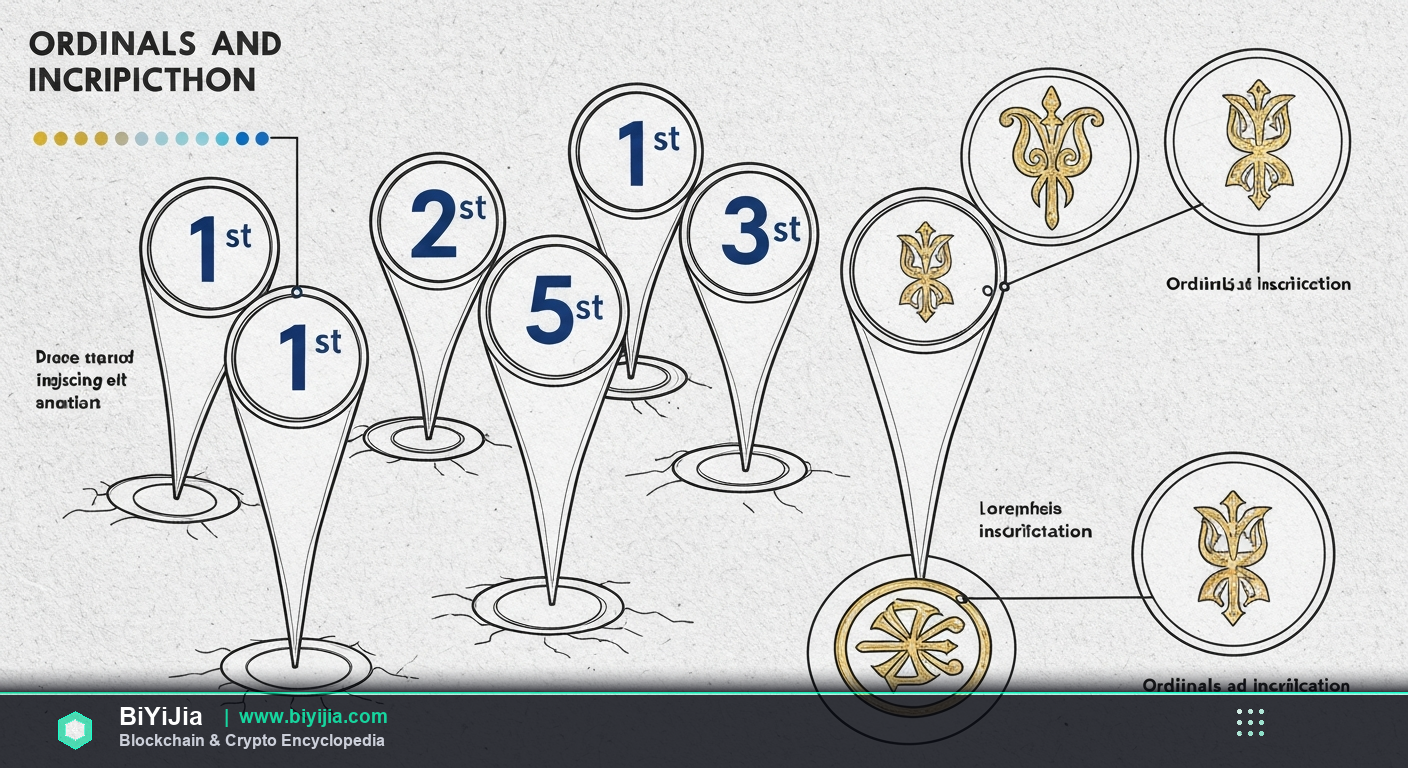
At its heart, the Ordinals protocol treats every satoshi—the smallest Bitcoin unit—as a sequentially numbered object. When you "inscribe" something, you simply write a small piece of data (image, text, or code) into the witness portion of a Bitcoin transaction that moves that specific satoshi. The result is a permanent, tamper‑proof record that lives forever on Bitcoin’s immutable ledger.
Think of it like stamping a serial number on a physical coin and then carving a tiny engraving onto that exact coin. The coin still functions as money, but now it also carries a unique artwork or message that anyone can verify.
How It Works
- Each satoshi receives a sequential ordinal number based on its position in the blockchain’s transaction history.
- A user selects a satoshi they own and creates a transaction that includes a witness field containing the data they want to attach.
- The Bitcoin network validates the transaction as usual; the data is stored in the transaction’s witness, which is part of the block’s Merkle tree.
- Because the witness data is committed to the block, the inscription becomes immutable and publicly verifiable.
- Anyone can retrieve the inscription by locating the transaction that moved the inscribed satoshi and reading the witness bytes.
Core Features
On‑Chain Storage: Inscriptions reside directly in Bitcoin’s block data, meaning they inherit Bitcoin’s security model.
Native Compatibility with BRC‑20: The BRC‑20 token standard builds on Ordinals, allowing simple fungible tokens to be issued without smart contracts.
Immutable Provenance: Once an inscription is confirmed, it cannot be altered or removed, providing a permanent provenance record.
Low-Level Accessibility: Developers can interact with inscriptions using standard Bitcoin libraries; no special sidechains are required.
Scalable Indexing: Indexing services (e.g., ordinals.com) map ordinal numbers to transaction IDs, making lookup fast despite Bitcoin’s large UTXO set.
Cost Predictability: Fees are based on transaction size, not on contract execution, which can be easier to estimate for simple data blobs.
Real‑World Applications
- Gamma.io: A marketplace where artists mint Bitcoin‑based NFTs; over 12,000 inscriptions sold in Q1 2024, generating $45 M in volume.
- Ordimint: Platform that lets users create BRC‑20 tokens; more than 8 M BRC‑20 tokens minted by mid‑2025.
- Scarce City: Virtual land project using inscriptions to mark parcels; each parcel is a 256×256 pixel PNG stored on‑chain.
- Runes: Decentralized identity tags that embed a short string (e.g., a Twitter handle) onto a satoshi; over 200 k identity inscriptions as of Dec 2025.
- Stamps: Collectible “digital postage” where each stamp is a 1 KB image inscribed on a satoshi; community has issued more than 30 k unique stamps.
Comparison with Related Concepts
Ordinals vs Bitcoin NFT: Ordinals are the technical protocol; "Bitcoin NFT" is the broader market term that includes any NFT‑like asset on Bitcoin, often built with Ordinals.
Ordinals vs BRC‑20: BRC‑20 is a token standard that leverages Ordinals for fungible assets, while Ordinals themselves can hold any data, not just token balances.
Ordinals vs Ethereum ERC‑721: ERC‑721 relies on smart contracts and off‑chain storage pointers, whereas Ordinals store the payload directly on Bitcoin’s base layer.
Risks & Considerations
Permanent Data Commitment: Once you inscribe something, it cannot be removed; accidental or illegal content can create legal exposure.
Fee Volatility: Inscription transactions are larger, so during network congestion fees can spike dramatically.
Scalability Limits: Bitcoin’s block size caps the amount of data you can embed per transaction, limiting file size (generally under 4 KB).
Tooling Maturity: Indexing and wallet support are still evolving; some users may face compatibility issues.
Regulatory Uncertainty: Authorities are still figuring out how to treat on‑chain data that isn’t purely financial.
Embedded Key Data
According to a 2025 report by Glassnode, inscriptions accounted for roughly 0.03 % of total Bitcoin transaction volume but generated over $120 M in fees in the first half of 2025.
Data from the Bitcoin Ordinals Index shows that the average inscription size is 1.8 KB, comfortably fitting within the 4 KB witness limit while still allowing rich media.
Frequently Asked Questions
What are Bitcoin Ordinals?
Bitcoin Ordinals are a numbering scheme that assigns a unique sequential identifier to every satoshi as it moves through the blockchain, enabling each satoshi to be tracked and referenced individually.
How do inscriptions differ from regular Bitcoin transactions?
Inscriptions add arbitrary data to the witness part of a transaction that moves a specific satoshi. Regular transactions only contain input and output scripts without extra payloads.
Can I create a BRC‑20 token using Ordinals?
Yes. BRC‑20 is built on top of the Ordinals protocol; you inscribe a JSON payload that follows the BRC‑20 schema, and wallets that understand the standard will treat it as a fungible token.
Are Ordinals reversible or can they be deleted?
No. Once a transaction is confirmed, the data becomes part of Bitcoin’s immutable ledger. Deleting or altering an inscription would require a hard fork, which is highly unlikely.
Do I need a special wallet to hold inscribed satoshis?
Most modern Bitcoin wallets can display ordinal numbers, but only a few (e.g., Xverse, Hiro) support viewing and managing inscriptions directly. You can still hold the satoshi in any wallet; the data remains on‑chain regardless of the client.
How does the cost of minting an inscription compare to an Ethereum NFT?
Minting an inscription typically costs between $5‑$20 in Bitcoin fees, depending on network congestion, whereas Ethereum NFT minting can range from $30‑$150 due to gas fees and contract execution costs.
Summary
Ordinals & Inscriptions give individual satoshis a unique identity and let anyone embed data directly on Bitcoin, opening the door to NFTs, BRC‑20 tokens, and new forms of digital provenance. Understanding the mechanics, benefits, and risks helps you decide whether to explore this emerging layer of Bitcoin innovation alongside concepts like Bitcoin NFT and Satoshi‑based collectibles.