


Data Availability refers to the guarantee that transaction data is fully published and can be retrieved by anyone, ensuring rollups and modular chains can verify and settle securely.
Key Takeaways
- One-sentence definition: Data Availability ensures that all blockchain data needed for validation is publicly accessible.
- Core feature: Separates data storage from consensus, enabling modular designs.
- Real‑world application: Used by Celestia, Polygon zkEVM, and other rollup‑friendly platforms.
- Compared to traditional monolithic chains, DA layers reduce bottlenecks and improve scalability.
- Risk warning: If data isn’t available, validators can’t prove correctness, leading to possible fraud.
What Is Data Availability?
Data Availability is the property that ensures every piece of transaction data a blockchain needs to validate is posted and can be fetched by anyone at any time.
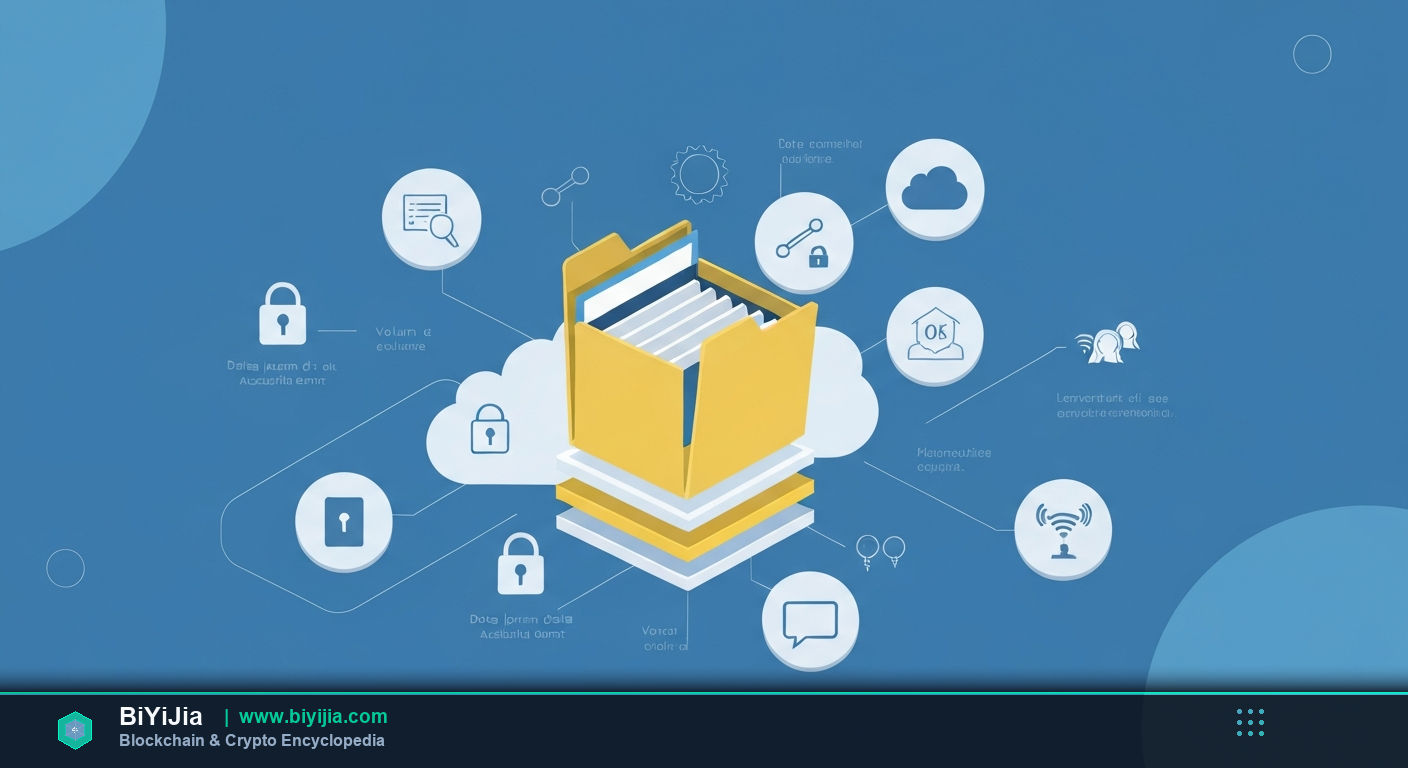
In technical terms, a DA layer publishes the raw calldata or state diff to a distributed storage network, then provides cryptographic proofs (often Merkle or Reed‑Solomon) that the data set is complete. Validators sample random chunks; if enough samples pass, the whole set is considered available. This decouples the heavy lifting of data propagation from consensus, letting the consensus layer focus on ordering and finality.
Think of it like a public library: the consensus engine is the librarian who decides which books (blocks) go on the shelf, while the DA layer is the library’s catalog and shelving system that makes sure every page is physically present and anyone can pull a book off the shelf to read it.
How It Works
- Transaction data is bundled by a rollup or smart‑contract platform and sent to the DA layer.
- The DA layer shards the data and spreads shards across many nodes, each storing only a fraction.
- Nodes generate compact proofs that their shards are part of the full data set; these proofs are broadcast to the consensus chain.
- Validators randomly sample shards and verify the proofs; if the sampling passes, the data is declared available.
- When a challenge arises, the DA layer can reconstruct the missing piece using erasure coding, ensuring no single point of failure.
Core Features
- Decoupled Architecture: Separates data storage from block ordering, enabling modular blockchain stacks.
- Erasure Coding: Uses Reed‑Solomon or similar codes so that any subset of shards can reconstruct the whole data set.
- Sampling Security: Randomized sampling provides probabilistic guarantees that missing data will be caught.
- Scalability: By off‑loading data, the consensus layer can handle higher throughput without bloating.
- Interoperability: A single DA layer can serve multiple rollups, L2s, or even sidechains.
- Economic Incentives: Validators earn fees for storing and proving data, while challengers receive rewards for exposing gaps.
Real-World Applications
- Celestia – The first purpose‑built DA layer, processing over 1.8 million DA proofs in a single week, a 35 % increase from Q4 2024 (Celestia Report).
- Polygon zkEVM – Leverages Celestia’s DA layer to achieve sub‑second finality for zk‑rollups while keeping calldata costs under $0.001 per transaction.
- Arbitrum Nova – Uses a hybrid DA approach, storing compressed calldata on a specialized DA service, reducing L2 gas fees by 40 % compared to its mainnet.
- Optimism Bedrock – Partners with a DA provider to guarantee that all dispute data is instantly available, enabling faster fraud proofs.
- StarkNet – Relies on a DA layer that offers deterministic data retrieval times, crucial for its STARK‑based proof system.
Comparison with Related Concepts
- Data Availability vs Data Finality: Availability ensures data can be read; finality ensures the order of that data cannot be changed.
- DA Layer vs Full‑Node Storage: A DA layer stores only shards and proofs, while a full node keeps the entire history, leading to higher storage costs for the latter.
- Modular vs Monolithic Chains: Modular chains outsource DA to a dedicated layer, whereas monolithic chains bundle consensus, execution, and DA into one stack.
- Rollup vs Sidechain: Rollups depend on a DA layer for security; sidechains usually manage their own data availability, which can be less robust.
Risks & Considerations
- Data Unavailability Attack: Malicious actors may withhold shards, forcing a rollback or causing disputes.
- Sampling Failure: If validator sampling is insufficient, gaps can slip through, undermining security.
- Economic Centralization: High fees for storage may push data hosting to a few large providers, re‑introducing central points of failure.
- Interoperability Bugs: Misaligned encoding schemes between rollups and the DA layer can cause data corruption.
- Regulatory Exposure: Storing large volumes of user data off‑chain may attract data‑privacy regulations.
In Q3 2025, the DA layer market reached $2.3 billion in cumulative funding, according to Crunchbase, reflecting rapid institutional interest. Meanwhile, a recent academic study showed that sampling 1 % of shards yields a 99.9 % confidence level in detecting missing data (MIT Data Security Lab, 2026).
Frequently Asked Questions
What is data availability and why does it matter for rollups?
Data availability guarantees that the calldata a rollup publishes can be retrieved by anyone, which is essential for fraud proofs and for users to verify that the state transition is correct. Without it, a rollup could hide malicious state changes, breaking trust.
How does a DA layer differ from traditional blockchain storage?
Traditional chains store the entire block data on every full node, leading to high storage costs and slower sync times. A DA layer shards the data, stores only pieces, and uses erasure coding, dramatically reducing the burden on each node while still providing cryptographic guarantees.
Can I use any DA provider with my rollup?
Most modern rollups are built to be DA‑agnostic, meaning they can plug into any DA layer that follows the standard proof‑of‑availability interface. However, you need to verify compatibility with the provider’s encoding scheme and challenge‑response logic.
What happens if data becomes unavailable after a block is finalized?
Validators can trigger a challenge period. If they prove the data is missing, the block is considered invalid and the rollup must re‑publish the data, potentially incurring penalties for the proposer.
Is data availability a solved problem in 2026?
It’s far from solved. While DA layers like Celestia have proven the concept at scale, challenges around sampling security, economic incentives, and regulatory compliance remain active research topics.
Summary
Data Availability is the backbone that lets modular blockchains, rollups, and DeFi applications verify state without each node storing the entire history. As the ecosystem matures, understanding DA layers—and their risks—will be key to building secure, scalable crypto infrastructure.